The Abacus
The world's first computing device.
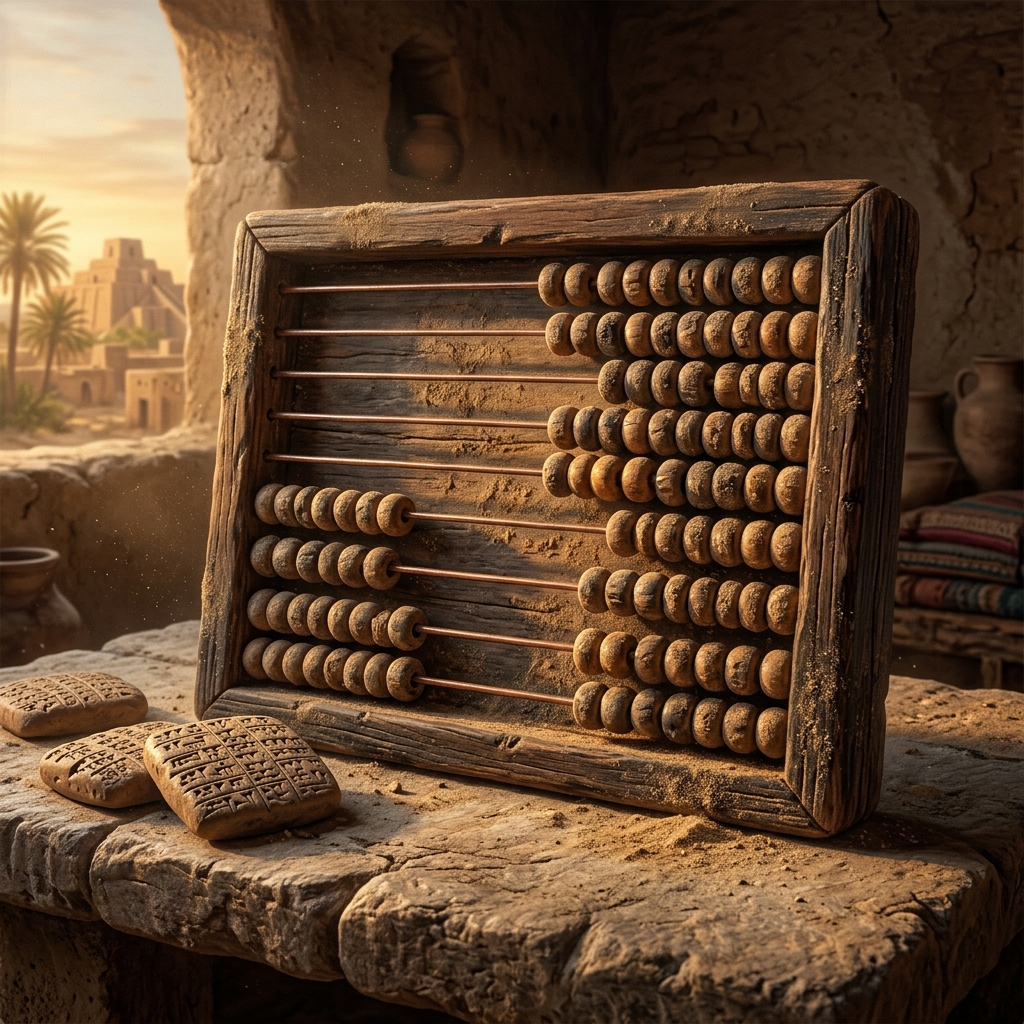
First used by the Sumerians in Mesopotamia, the abacus is a mechanical counting frame that allowed for rapid addition and subtraction long before the invention of written numeric systems. It established the fundamental concept of using physical states to represent and manipulate abstract numeric values.
Open in interactive timeline →Verified Facts
- The earliest abacuses were just lines drawn in the sand with pebbles used as counters. (The word "calculus" comes from the Latin word for pebble).
- Different cultures developed their own versions independently, including the Chinese suanpan and the Roman hand abacus.
- In the hands of an expert, an abacus can be faster for basic arithmetic than an electronic calculator.
Frequently Asked Questions
What was The Abacus?
First used by the Sumerians in Mesopotamia, the abacus is a mechanical counting frame that allowed for rapid addition and subtraction long before the invention of written numeric systems. It established the fundamental concept of using physical states to represent and manipulate abstract numeric values.
When did The Abacus happen?
The Abacus: c. 2700–2300 BCE.
Why does The Abacus matter?
The world's first computing device.
Sources & Further Reading
Cite This Page
AskHistoryAI. “The Abacus.” AskHistoryAI — Interactive Timeline of Everything. Updated 2026-09-11. https://askhistoryai.com/event/tech-abacus/
Every fact on this page is checked against the published fact ledger and methodology; sources are listed above.