The "True" Candle
Pushing back the darkness.
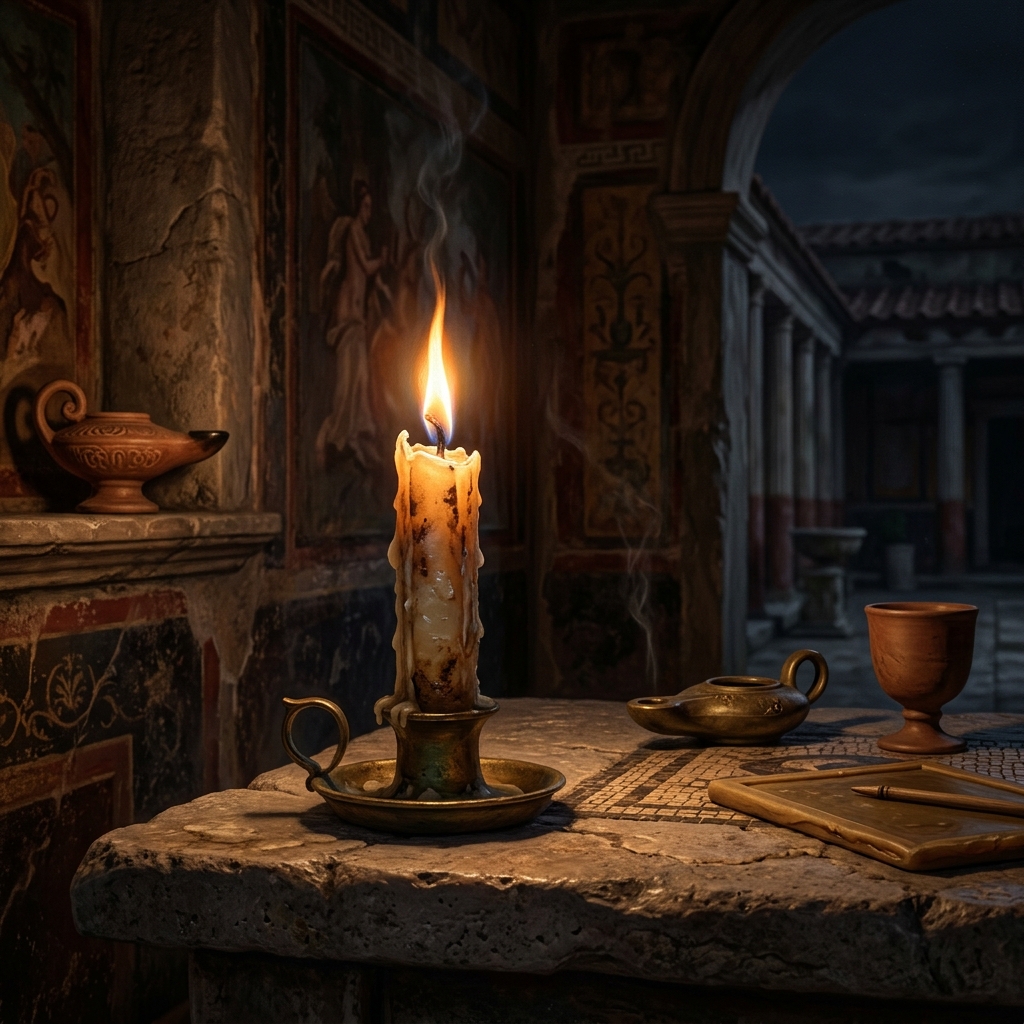
While ancient Egyptians used rushlights (reeds soaked in animal fat), the Ancient Romans are widely credited with inventing the first "true" candle featuring a central wick. They did this by repeatedly dipping rolled papyrus into melted tallow (rendered animal fat).
Open in interactive timeline →Verified Facts
- Before the electric lightbulb, human productivity was strictly limited by the sun. Candles allowed humans to read, write, and work deep into the night.
- These early tallow candles smelled terrible when burned and produced massive amounts of black smoke.
- During the Middle Ages, beeswax candles were introduced in Europe. They burned cleanly without the foul odor, but were so expensive they were strictly reserved for the wealthy and the Church.
Frequently Asked Questions
What was The "True" Candle?
While ancient Egyptians used rushlights (reeds soaked in animal fat), the Ancient Romans are widely credited with inventing the first "true" candle featuring a central wick. They did this by repeatedly dipping rolled papyrus into melted tallow (rendered animal fat).
When did The "True" Candle happen?
The "True" Candle: c. 500 BCE.
Why does The "True" Candle matter?
Pushing back the darkness.
Sources & Further Reading
Cite This Page
AskHistoryAI. “The "True" Candle.” AskHistoryAI — Interactive Timeline of Everything. Updated 2026-09-11. https://askhistoryai.com/event/inv-candle/
Every fact on this page is checked against the published fact ledger and methodology; sources are listed above.