Written Language (Cuneiform)
Information stored outside the human brain.
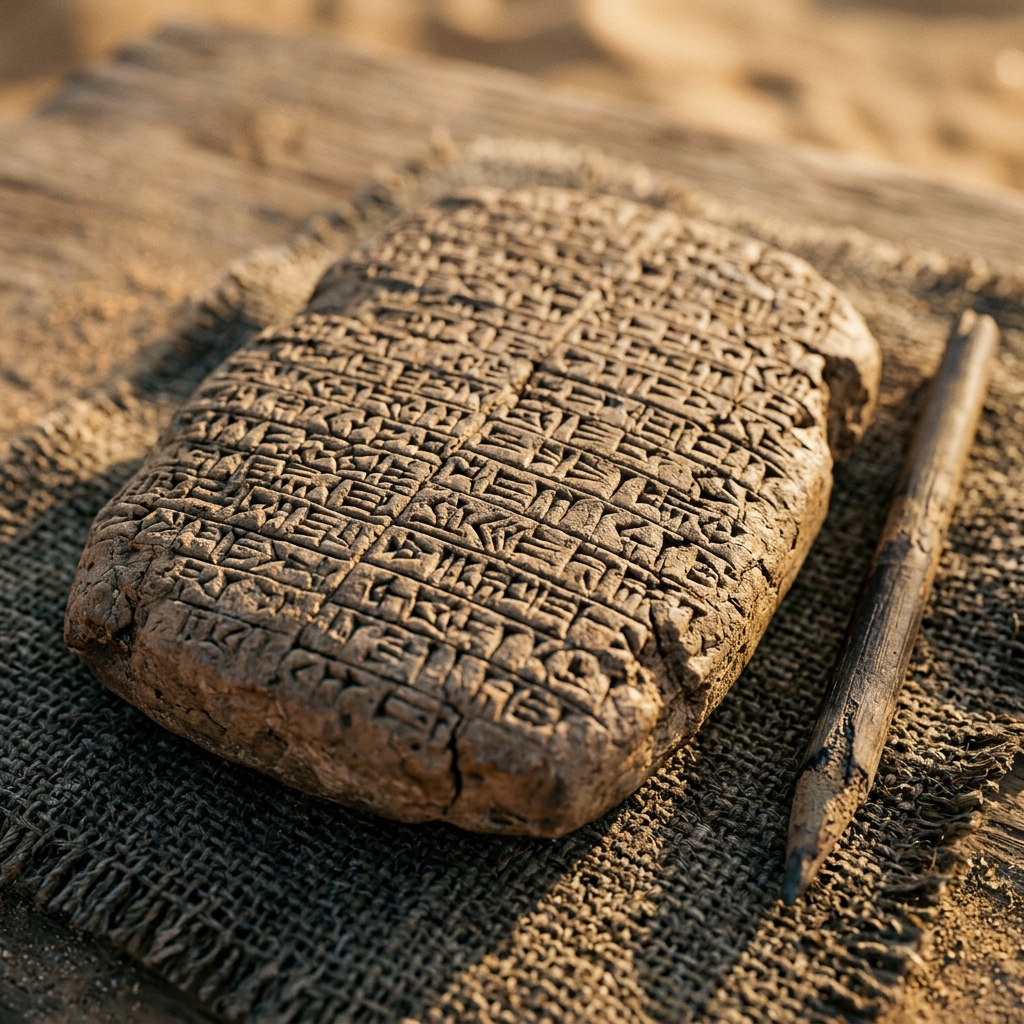
Developed by the Sumerians in Mesopotamia, cuneiform is the earliest known system of writing. By pressing wedge-shaped styluses into wet clay tablets, humans could record information permanently, marking the absolute transition from prehistory to recorded history.
Open in interactive timeline →Verified Facts
- The earliest writing was not invented for poetry or religious texts—it was invented by accountants to track grain inventories and tax records.
- Because clay tablets could be fired — deliberately in kilns, or accidentally in the very blazes that destroyed cities — many survived for millennia (unlike paper or papyrus), leaving hundreds of thousands of records; sun-dried tablets, by contrast, are fragile and dissolve in water.
- Writing allowed complex civilizations to organize massive bureaucracies, enforce legal codes (like the Code of Hammurabi), and pass accumulated knowledge across generations without relying on fragile oral tradition.
Frequently Asked Questions
What was Written Language (Cuneiform)?
Developed by the Sumerians in Mesopotamia, cuneiform is the earliest known system of writing. By pressing wedge-shaped styluses into wet clay tablets, humans could record information permanently, marking the absolute transition from prehistory to recorded history.
When did Written Language (Cuneiform) happen?
Written Language (Cuneiform): c. 3400 BCE.
Why does Written Language (Cuneiform) matter?
Information stored outside the human brain.
Sources & Further Reading
Cite This Page
AskHistoryAI. “Written Language (Cuneiform).” AskHistoryAI — Interactive Timeline of Everything. Updated 2026-09-11. https://askhistoryai.com/event/inv-writing/
Every fact on this page is checked against the published fact ledger and methodology; sources are listed above.