The Jacquard Loom
The punch card that wove the fabric of the digital age.
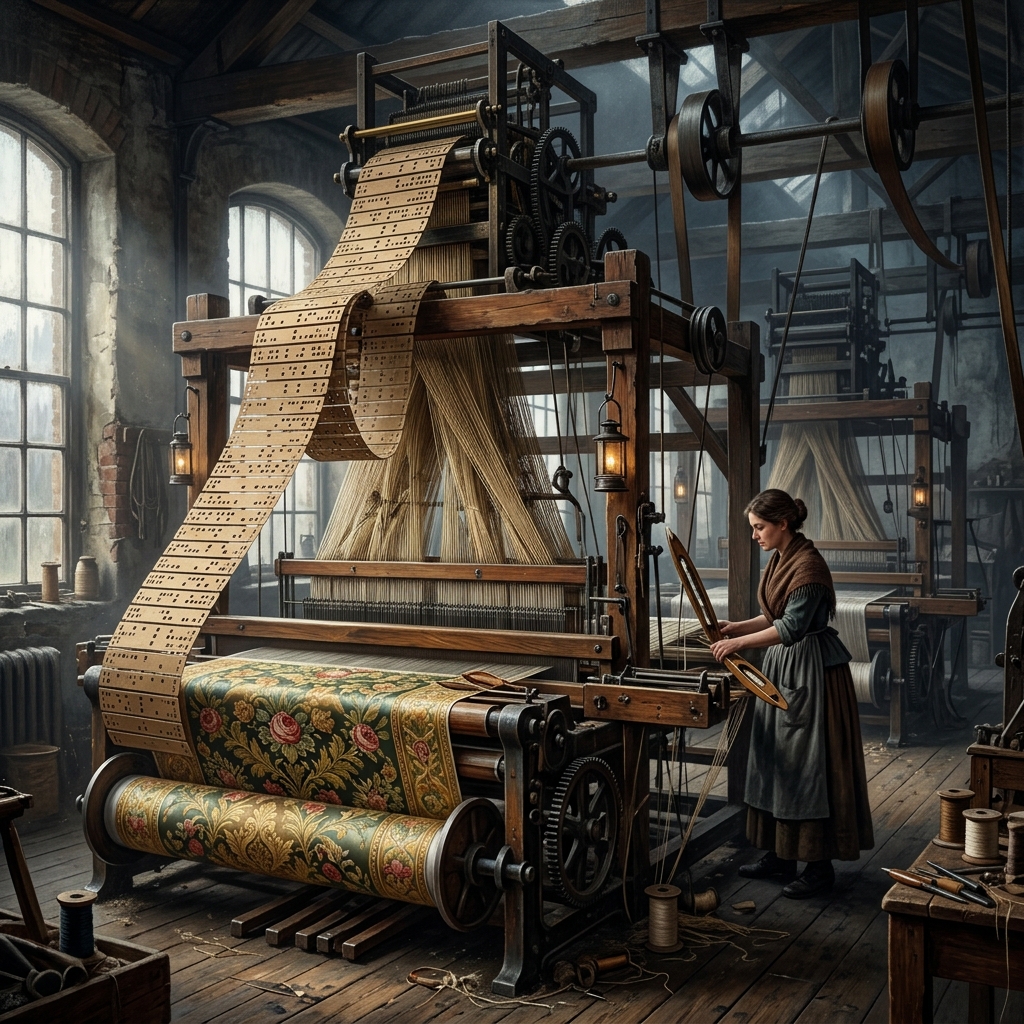
Invented by Joseph Marie Jacquard, this power loom simplified the manufacturing of complex textiles by using interchangeable cards with punched holes to control the weaving of patterns. It demonstrated that machines could be controlled by binary data (hole vs. no hole).
Open in interactive timeline →Verified Facts
- The punch cards acted exactly like early computer memory. To change the pattern the loom wove, you simply swapped out the deck of cards.
- This binary punch-card system directly inspired Charles Babbage's design for the Analytical Engine, bridging the gap between textiles and computing.
- Punch cards based on Jacquard's design remained the primary method of inputting data into computers well into the 1970s.
Frequently Asked Questions
What was The Jacquard Loom?
Invented by Joseph Marie Jacquard, this power loom simplified the manufacturing of complex textiles by using interchangeable cards with punched holes to control the weaving of patterns. It demonstrated that machines could be controlled by binary data (hole vs. no hole).
When did The Jacquard Loom happen?
The Jacquard Loom: 1804 CE.
Why does The Jacquard Loom matter?
The punch card that wove the fabric of the digital age.
Sources & Further Reading
Cite This Page
AskHistoryAI. “The Jacquard Loom.” AskHistoryAI — Interactive Timeline of Everything. Updated 2026-09-11. https://askhistoryai.com/event/tech-jacquard/
Every fact on this page is checked against the published fact ledger and methodology; sources are listed above.