The Intel 4004 Microprocessor
The first "computer on a chip."
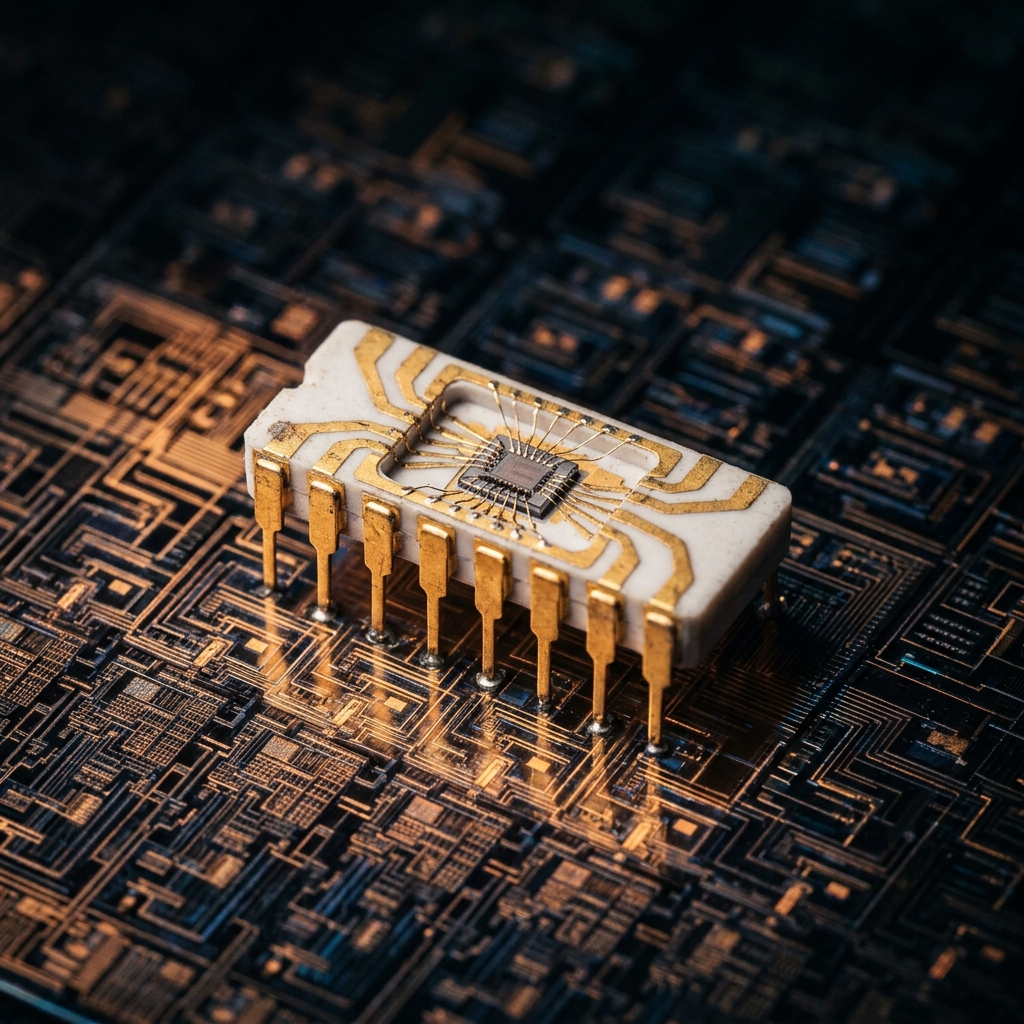
Before 1971, computer processors were built across multiple circuit boards. Intel changed history by packing all the essential functions of a central processing unit (CPU)—including the ALU and control unit—onto a single silicon chip roughly the size of a fingernail.
Open in interactive timeline →Verified Facts
- It was originally designed to power a Japanese calculator (the Busicom 141-PF), not a general-purpose computer.
- It packed 2,300 transistors onto a single chip. By comparison, modern consumer CPUs contain tens of billions of transistors.
- This miniaturization made it possible to build computers small and cheap enough to fit in a home or a pocket.
Frequently Asked Questions
What was The Intel 4004 Microprocessor?
Before 1971, computer processors were built across multiple circuit boards. Intel changed history by packing all the essential functions of a central processing unit (CPU)—including the ALU and control unit—onto a single silicon chip roughly the size of a fingernail.
When did The Intel 4004 Microprocessor happen?
The Intel 4004 Microprocessor: 1971 CE.
Why does The Intel 4004 Microprocessor matter?
The first "computer on a chip."
Sources & Further Reading
Cite This Page
AskHistoryAI. “The Intel 4004 Microprocessor.” AskHistoryAI — Interactive Timeline of Everything. Updated 2026-09-11. https://askhistoryai.com/event/tech-microprocessor/
Every fact on this page is checked against the published fact ledger and methodology; sources are listed above.