The World Wide Web
The invention that connected humanity's knowledge.
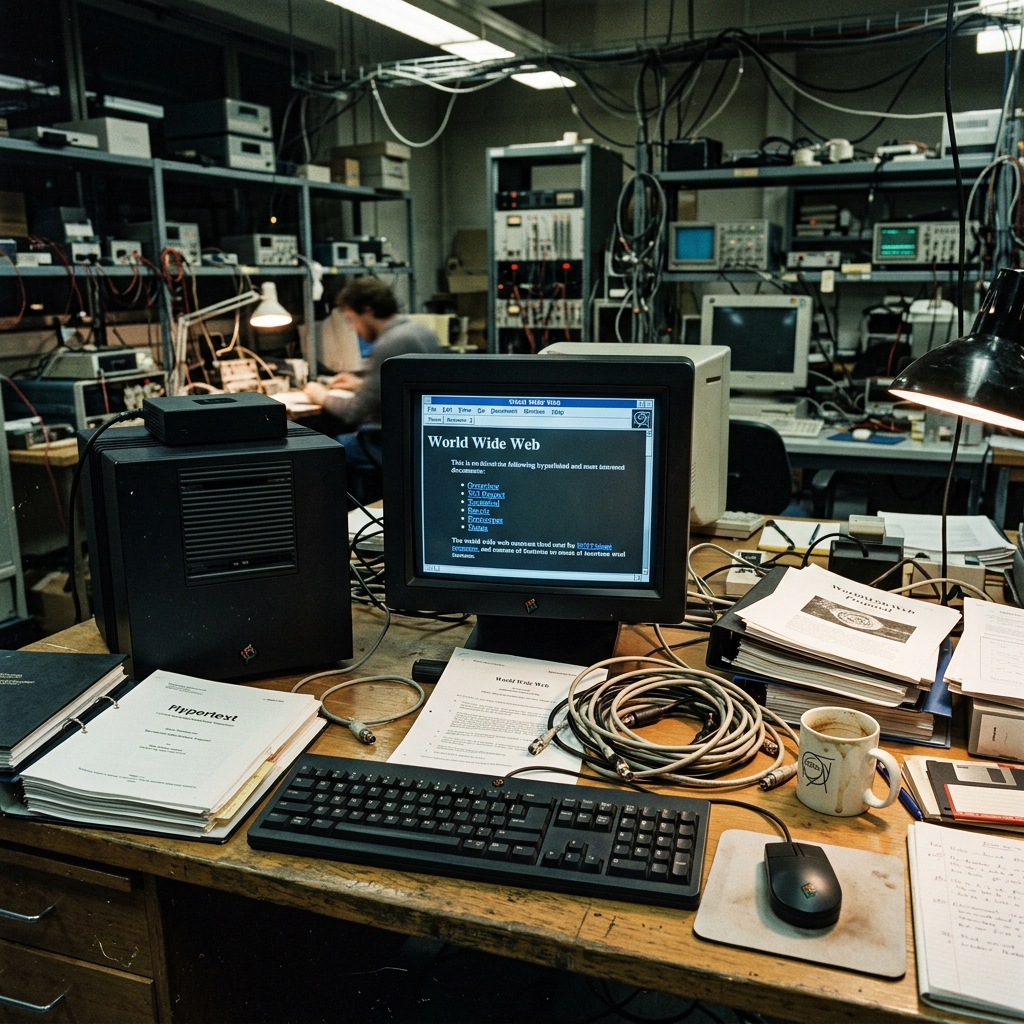
While working at CERN in Switzerland, British computer scientist Tim Berners-Lee invented the World Wide Web. He wrote the first web browser and the fundamental technologies that still run the internet today: HTML (formatting), URI (addresses), and HTTP (linking).
Open in interactive timeline →Verified Facts
- The "Internet" (the physical network of computers) existed for decades before the "Web." The Web is just an application running on the Internet that uses hypertext links to connect documents.
- Berners-Lee used a NeXT Computer (built by Steve Jobs's company after he was ousted from Apple) to write the first web server and browser.
- Crucially, CERN released the Web software into the public domain for free in 1993, ensuring it would become a universal, open standard rather than a proprietary corporate walled garden.
Frequently Asked Questions
What was The World Wide Web?
While working at CERN in Switzerland, British computer scientist Tim Berners-Lee invented the World Wide Web. He wrote the first web browser and the fundamental technologies that still run the internet today: HTML (formatting), URI (addresses), and HTTP (linking).
When did The World Wide Web happen?
The World Wide Web: 1989 CE.
Why does The World Wide Web matter?
The invention that connected humanity's knowledge.
Sources & Further Reading
Cite This Page
AskHistoryAI. “The World Wide Web.” AskHistoryAI — Interactive Timeline of Everything. Updated 2026-09-11. https://askhistoryai.com/event/tech-www/
Every fact on this page is checked against the published fact ledger and methodology; sources are listed above.