The K-Pg Extinction Event
c. 66 Million Years Ago
The apocalyptic asteroid strike that ended the age of reptiles.
Read the full sourced page: The K-Pg Extinction Event
The Day the Reset Button Was Pressed
Some 66 million years ago, a carbonaceous asteroid roughly ten to fifteen kilometers across struck the shallow seas off the Yucatán Peninsula, excavating the ~200-kilometer Chicxulub crater and erasing an estimated 75% of Earth's species in a geological instant. The dinosaurs that had ruled the land for over 150 million years vanished, save for the feathered lineage we still call birds. The K-Pg extinction is the most famous of Earth's mass die-offs not because it was the largest — the end-Permian was deadlier — but because of what it cleared away and what it let rise.
Preconditions: A Universe That Builds Then Breaks
Nothing about that asteroid was an accident of a single afternoon. Its iron and silicate body, and the limestone and sulfur it vaporized on impact, were forged in the deep chemistry begun at The Big Bang (sv-big-bang) and enriched across generations of The First Supernovas (sv-first-supernova). The very planet it struck — its oceans, its carbon-rich crust — coalesced during the Formation of the Solar System & Earth (sv-earth-formation) from the same disk of debris that left the inner solar system littered with the impactors that periodically resurface life's story. The Cretaceous world the asteroid ended was itself the product of an unbroken biological chain: the Origin of Life (sv-origin-of-life), the oxygen revolution of the Great Oxygenation Event (sv-great-oxygenation), and the burst of body plans in the Cambrian Explosion (sv-cambrian-explosion) that first made large, mobile animals possible. Extinction is only dramatic because evolution had built so much to lose.
Scientists still debate whether the impact acted alone. The vast volcanic outpourings of the Deccan Traps in India were straining the climate in the same window, and a leading view holds that an already-stressed biosphere was tipped over the edge by the Chicxulub strike — a one-two punch of fire from below and fire from the sky.
Aftermath: An Empire Falls, a Dynasty Begins
The extinction's deepest historical irony is that it was the making of us. Through the entire age of dinosaurs, the descendants of The First True Mammals (sv-first-mammals) had survived as small, nocturnal, insect-eating creatures, ecologically pinned beneath the reptilian giants. When the giants died, the niches they had monopolized — large herbivore, apex predator, canopy browser — fell suddenly vacant. Mammals radiated explosively to fill them, growing larger and more varied within a few million years. Out of that radiation came The First Primates (sv-first-primates), then The Rise of the Great Apes (sv-great-apes), and eventually the Human-Chimpanzee Split (sv-human-chimp-split) that set our own lineage on its course.
Without the K-Pg reset, there is no obvious path to a primate civilization. Every human achievement downstream — the Agricultural Revolution (sv-agriculture), the Industrial Revolution (sv-industrial-revolution), the long climb toward artificial minds — rests on an ecological accident: a mountain-sized rock arriving at the wrong angle on the wrong spring morning.
The Long Thread
The K-Pg boundary is read today as a thin, iridium-rich clay layer found in rock outcrops worldwide — a global signature of catastrophe that, fittingly, helped confirm the impact hypothesis itself. It is a reminder embedded in the very arc of this timeline: the same cosmic processes that assemble worlds and seed them with life also throw the debris that can unmake it. When Darwin described descent with modification in Darwin & the Origin of Species (sv-charles-darwin), he could not yet know how violently contingent the tree of life truly was. The dinosaurs' last day was the mammals' first dawn — and ours.
Global Context
At roughly 66.05 Ma, the Late Maastrichtian world bore little resemblance to today. The continents were dispersing from Pangaea: the Atlantic was widening, India was a fast-drifting island approaching Asia, and shallow epicontinental seas like North America's Western Interior Seaway were regressing. Global climate, though cooling from the Cretaceous Thermal Maximum, remained warm and largely ice-free. Non-avian dinosaurs dominated terrestrial vertebrate niches; ammonites, rudist bivalves, and marine reptiles (mosasaurs, plesiosaurs) filled the seas; flowering plants (angiosperms) had already risen to ecological prominence. Crucially, the Deccan Traps in present-day India were erupting vast flood basalts across this interval, loading the atmosphere with CO2 and sulfur. Mammals existed but were mostly small and ecologically marginal. This was not a placid Eden interrupted by catastrophe but a biosphere already under volcanic and climatic stress when, per the Alvarez (1980) and Chicxulub-crater evidence, a 10-15 km asteroid struck the Yucatan, abruptly terminating the Mesozoic era.
The Paradigm Shift
The K-Pg event redirected both the history of life and the practice of science. Biologically, it eliminated roughly three-quarters of species, including all non-avian dinosaurs, ammonites, and most marine reptiles, vacating ecological space that mammals and birds rapidly filled. Renne, Lyson, and others document recovery within ~100,000-300,000 years: mammalian richness and body mass rebounded, and morphological evolution ran roughly threefold above Cretaceous background rates, seeding the placental radiation that ultimately produced primates and humans. Scientifically, the Alvarez et al. (1980) paper in Science was revolutionary. By identifying an extraterrestrial iridium anomaly at the boundary, it imported physics into paleontology and legitimized catastrophism within a discipline long dominated by Lyellian gradualism. The subsequent confirmation of the Chicxulub crater (Hildebrand et al., 1991) made bolide impact a central mechanism in Earth-system science, reshaped thinking about mass extinctions generally, and seeded modern planetary-defense concerns. It is arguably the clearest case where a single contingent event determined macroevolutionary trajectory.
Counterfactual: What If It Had Gone Differently
Had the Chicxulub impactor missed Earth, or struck deep ocean rather than the sulfate- and carbonate-rich Yucatan shelf, the extinction's severity might have differed markedly. Recent work emphasizes that the target rock's gypsum and carbonate maximized atmospheric sulfate aerosols and soot, driving the impact winter that collapsed photosynthesis; an oceanic strike would likely have released less climate-forcing material. Absent the impact, non-avian dinosaurs, which show no consensus evidence of terminal long-term decline (Bonsor et al.; though Sakamoto et al. argue otherwise), might have persisted, keeping mammals ecologically suppressed and plausibly forestalling the placental radiation underpinning primate and human origins. However, the Deccan Traps were already perturbing climate; some researchers (Keller; and 2023 modeling by Cox and Keller) argue volcanism alone could have driven major extinction, so a milder, more protracted turnover might still have occurred. The counterfactual is thus genuinely contingent: Gould's "replaying the tape" intuition applies, but the volcanic backdrop means it is not a simple "no impact, no extinction" scenario.
Scholarly Debate
The central, still-live debate concerns causation: impact, volcanism, or both. The Alvarez camp and most impact specialists, including Paul Renne, Sean Gulick, and the 41-author Schulte et al. (2010, Science) synthesis, argue the Chicxulub impact was the decisive and effectively sole driver, citing the globally synchronous iridium layer, shocked quartz, and the abrupt marine microfossil turnover precisely at the boundary. Opposing them, Gerta Keller (Princeton) and collaborators have long contended that Deccan Traps volcanism was the primary or co-equal cause, pointing to pre-boundary biotic stress and eruption timing. A reconciling position, advanced by Blair Schoene, Courtney Sprain, and Loyc Vanderkluysen, uses high-precision geochronology to debate whether the impact triggered or accelerated the largest Deccan eruptions, making cause and effect intertwined. A further dispute concerns dinosaur health beforehand: Sakamoto, Benton, and Venditti (2016) argue clades were already in decline, while others find diversity stable until the boundary. The relative weighting of impact versus volcanism remains genuinely unsettled.
How It Connects
What Made It Possible
- A roughly 10-to-15-kilometer-wide carbonaceous-type asteroid that formed in the outer Solar System beyond Jupiter was on a collision course with Earth, its outer-Solar-System origin later confirmed by ruthenium-isotope signatures in the impact deposits matching carbonaceous chondrites.
- The asteroid struck the Yucatan carbonate-and-sulfate-rich platform, vaporizing sulfur-bearing rock and excavating the roughly 180-to-200-kilometer-wide Chicxulub crater, an event whose timing was pinned to the boundary at about 66.04 million years ago by argon-argon and uranium-lead dating of impact spherules.
- The main pulse of Deccan Traps flood-basalt volcanism in India was already erupting in the late Maastrichtian, with peak eruptive activity beginning roughly 250,000 years before the boundary and outgassing large volumes of CO2 and SO2.
- A 2-to-4 degree Celsius Latest Maastrichtian Warming Event, linked to Deccan CO2 outgassing, destabilized the climate and ocean chemistry in the final tens of thousands of years before the boundary, increasing biotic stress on marine and terrestrial ecosystems.
- Late-Maastrichtian environmental stress had already shifted ecosystems toward disaster-opportunist species and caused dwarfing and declining abundance among calcareous microfossils, leaving specialist faunas predisposed to collapse.
- Non-avian dinosaurs and other large-bodied specialists had become the dominant terrestrial vertebrates, an ecological structure highly vulnerable to a sudden, prolonged disruption of primary productivity.
Its Legacy
- The impact injected dust, soot, and sulfate aerosols into the upper atmosphere, triggering an impact winter that suppressed photosynthesis for roughly a year or more and drove an estimated 75-to-76 percent of species, including all non-avian dinosaurs, to extinction.
- Ground-dwelling beaked birds were the only dinosaur lineage to survive, then radiated into the more than ten thousand bird species alive today, making modern birds the living descendants of dinosaurs.
- Surviving mammals, especially eutherian dietary generalists, underwent rapid taxonomic diversification in the earliest Paleocene, with morphological evolution rates running about three times higher than Cretaceous background levels.
- The vacated ecological niches enabled the placental mammal radiation that established the major modern mammal lineages and ultimately the primate ancestry from which humans descend.
- The boundary clay's worldwide iridium anomaly, discovered by Luis and Walter Alvarez with Frank Asaro and Helen Michel in 1980, founded the impact hypothesis and reshaped scientific understanding of mass extinctions as sometimes catastrophic and sudden.
- The K-Pg event became the canonical case study for asteroid-impact threats, informing modern planetary-defense efforts to detect and potentially deflect hazardous near-Earth objects.
Myth vs. Reality
Myth: All dinosaurs went extinct in the K-Pg event.
Reality: Non-avian dinosaurs died out, but birds are living dinosaurs that survived. Avian dinosaurs are the only dinosaur lineage to cross the K-Pg boundary, and they radiated into the more than 10,000 bird species alive today. So dinosaurs as a clade never fully went extinct; the familiar groups like Tyrannosaurus and Triceratops perished while beaked birds endured.
Myth: The asteroid impact killed the dinosaurs instantly.
Reality: The Chicxulub impactor (roughly 10-15 km wide) did not wipe out species in a single blast. Death came mainly from a prolonged 'impact winter': dust, soot, and sulfur aerosols blocked sunlight, collapsed photosynthesis, and plunged global temperatures for years to decades. A 2023 study identified fine silicate dust as a primary driver, with darkness potentially lasting up to two years. The extinction was a drawn-out ecological collapse, not an instantaneous event.
Myth: The K-Pg event killed off essentially all life on Earth.
Reality: The extinction was severe but highly selective, eliminating an estimated 75% of species, not all life. Many groups persisted, including crocodilians, turtles, amphibians, lizards, and mammals. Survival often correlated with small body size, ectothermic metabolism, freshwater or burrowing habits, and generalist diets; for example, cold-blooded crocodiles can go months without food, which helped them endure the collapse of food chains.
Myth: It is settled fact that dinosaurs were already in steep decline before the asteroid hit.
Reality: This is genuinely contested, not established. A 2021 Nature Communications study argued dinosaur diversity was falling from about 76 million years ago due to climate cooling, but other analyses (including 2020 and 2025 work) contend the apparent decline is an artifact of a patchy fossil record and limited exposed Late Cretaceous rock. Whether dinosaurs were truly declining remains an open debate among paleobiologists.
Myth: Scientists agree the asteroid was the sole cause, with volcanism playing no role.
Reality: The dominant view holds the Chicxulub impact as the primary trigger, but the contribution of the near-contemporaneous Deccan Traps volcanism in India is still debated. Some modeling (e.g., a 2020 PNAS study) concludes the impact alone explains the extinction and Deccan gases may even have partly buffered the climate; other researchers point to mercury spikes and a 'one-two punch' scenario in which the asteroid struck an already-stressed planet. The relative weight of each cause is not fully resolved.
Another Lens — The volcanism dissent — Deccan Traps over Chicxulub
Princeton paleontologist Gerta Keller is the leading scientific challenger to the Alvarez asteroid hypothesis. Drawing on foraminifera records, she argues the impact 'precedes the boundary by about 90,000 to 100,000 years' while 'the mass extinction really happened in the last few tens of thousands of years before the boundary,' and that the die-off occurred 'between four major lava flows that erupted in western India' — implicating Deccan Traps volcanism rather than the impact. This remains a genuine minority position within an active scientific debate, not a settled consensus.
Voices & Primary Sources
Deep-sea limestones exposed in Italy, Denmark, and New Zealand show iridium increases of about 30, 160, and 20 times, respectively, above the background level at precisely the time of the Cretaceous-Tertiary extinctions, 65 million years ago.— Luis W. Alvarez, Walter Alvarez, Frank Asaro & Helen V. Michel, "Extraterrestrial Cause for the Cretaceous-Tertiary Extinction," Science, vol. 208, no. 4448 (6 June 1980), pp. 1095-1108 (from the published abstract). This is the foundational asteroid-impact / iridium-anomaly paper. A modern scientific finding, not an ancient source.
Bolide impact and flood volcanism compete as leading candidates for the cause of terminal-Cretaceous mass extinctions. High-precision 40Ar/39Ar data indicate that these two mechanisms may be genetically related, and neither can be considered in isolation.— Paul R. Renne, Courtney J. Sprain, Mark A. Richards, Stephen Self, Loÿc Vanderkluysen & Kanchan Pande, "State shift in Deccan volcanism at the Cretaceous-Paleogene boundary, possibly induced by impact," Science, vol. 350, no. 6256 (2 Oct 2015), pp. 76-78 (opening of the abstract). Represents the modern 'both causes combined' view.
I still believe the volcanic outbursts that created the vast Deccan Traps were primarily to blame.— Paleontologist Gerta Keller (Princeton University), interviewed in "Down to Earth With: Paleontologist Gerta Keller," Earth Magazine (American Geosciences Institute). Keller is the best-known scientific critic of the asteroid-impact hypothesis; this is her own statement in a reported interview.
In Their Words
"Deep-sea limestones exposed in Italy, Denmark, and New Zealand show iridium increases of about 30, 160, and 20 times, respectively, above the background level at precisely the time of the Cretaceous-Tertiary extinctions, 65 million years ago." — Luis W. Alvarez, Walter Alvarez, Frank Asaro, and Helen V. Michel, "Extraterrestrial Cause for the Cretaceous-Tertiary Extinction," Science, vol. 208, no. 4448 (6 June 1980), opening of the abstract.
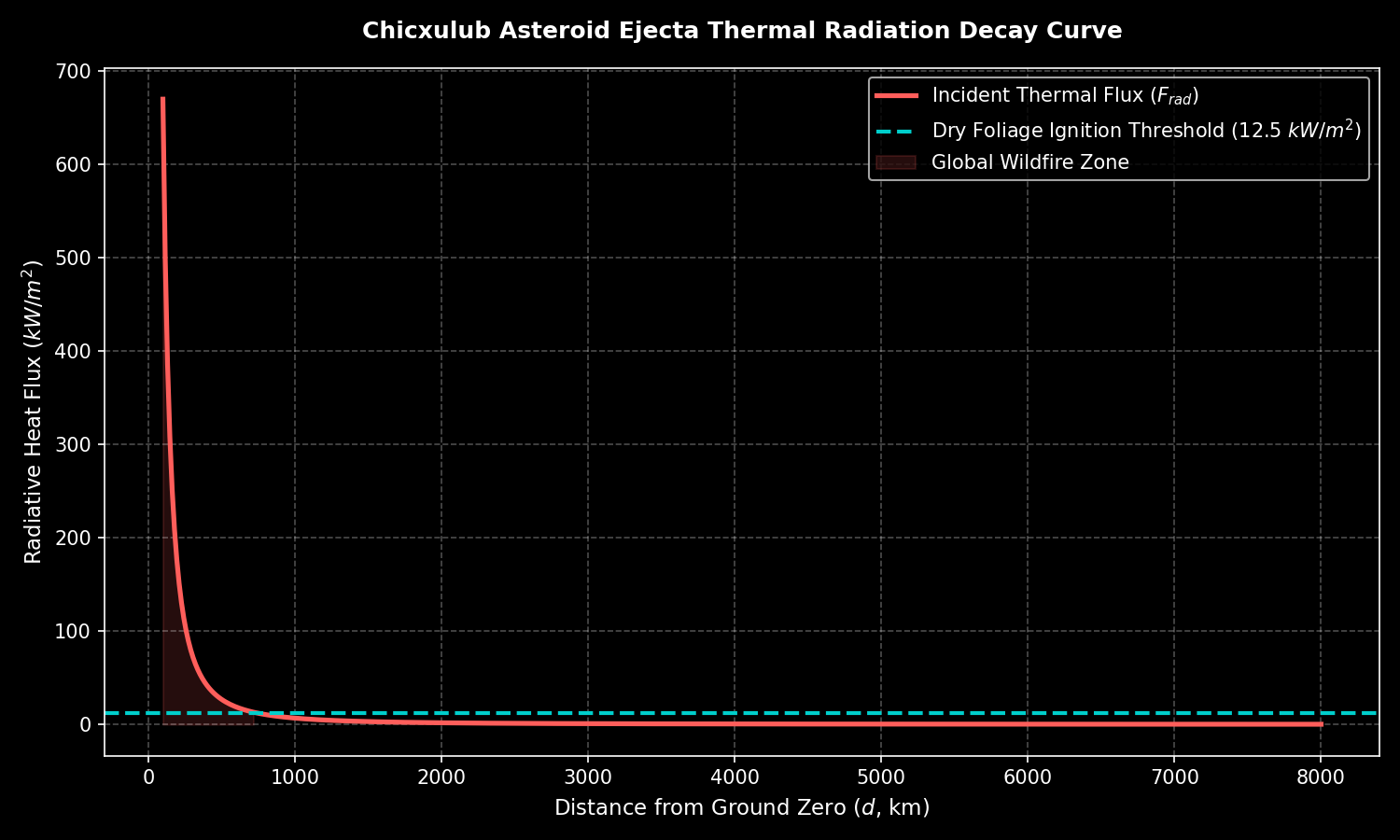
Data Visualization
References & Sources
- Cretaceous–Paleogene extinction event — Wikipedia
- Luis W. Alvarez, Walter Alvarez, Frank Asaro & Helen V. Michel, 'Extraterrestrial Cause for the Cretaceous-Tertiary Extinction,' Science 208 (1980): 1095-1108
- Peter Schulte et al., 'The Chicxulub Asteroid Impact and Mass Extinction at the Cretaceous-Paleogene Boundary,' Science 327 (2010): 1214-1218
- Blair Schoene, Michael Eddy, Kyle Samperton, C. J. Sprain et al., 'The eruptive tempo of Deccan volcanism in relation to the Cretaceous-Paleogene boundary,' Science 363 (2019): 862-866
- Tyler R. Lyson et al., 'Exceptional continental record of biotic recovery after the Cretaceous-Paleogene mass extinction,' Science 366 (2019): 977-983
- Walter Alvarez, T. rex and the Crater of Doom (Princeton University Press, 1997)