The First Insects
c. 400 Million Years Ago
Tiny creatures that would one day outnumber every other animal on Earth combined.
Read the full sourced page: The First Insects
Six Legs and the Conquest of the Air
Among the small, scuttling creatures of the early Devonian lies one of evolution's most consequential designs: the insect body plan of six legs, a hardened cuticle, and segmented bodies that would eventually outnumber every other animal lineage on Earth. The first insects do not announce themselves with the drama of the Cambrian Explosion (sv-cambrian-explosion). They arrive quietly, in fragments, embedded in stone — and yet they inaugurate a dynasty that still dwarfs us in sheer biomass and species count.
Deep Preconditions
No insect could exist without a long chain of prior revolutions. The free oxygen insects breathe through their tracheal tubes was a gift of the Great Oxygenation Event (sv-great-oxygenation). Their complex, mitochondria-powered cells descend from the First Complex Cells (sv-first-complex-cells), and the genetic recombination that let arthropod lineages diversify so explosively traces to the Invention of Sexual Reproduction (sv-invention-of-sex). Most immediately, insects required land that was worth living on. The colonization of the continents by plants — and the appearance of the First True Trees (sv-first-trees) — built the rotting leaf-litter, standing forests, and aerial habitat that early hexapods exploited. The move ashore that Tiktaalik (sv-tiktaalik) made famous for vertebrates was, for arthropods, already underway: insects were among the pioneers of terrestrial life.
A Contested Origin
The oldest claimed insect, Rhyniognatha hirsti, comes from the Rhynie chert of Aberdeenshire, Scotland — a silica-preserved hot-spring ecosystem dated to the Pragian stage of the Early Devonian, roughly 400–410 million years ago. For decades it was hailed as the earliest insect, and a 2004 Nature study even argued its mayfly-like mandibles implied it could fly. But honesty demands the caveat: in 2017, Carolin and Joachim Haug re-examined the specimen and argued its mouthparts look more like a myriapod (a centipede relative) than a true insect, and as of the mid-2020s no consensus has been reached. What is secure is that hexapods of some kind were thriving on land by the Devonian, alongside the earliest Sharks (sv-first-sharks) patrolling the seas.
The Reshaping of the World
Insects' true revolution was flight. They were the first animals to take to the air under their own power — perhaps 90 million years before any vertebrate — with the oldest unambiguous winged insects (Pterygota) appearing in the mid-Carboniferous around 325 million years ago. Flight transformed dispersal, predation, and escape, opening an entire dimension of ecological space. In the oxygen-rich Carboniferous atmosphere (estimated at 30–35% oxygen, versus 21% today), insects reached gigantic sizes: Meganeura, a griffinfly with a wingspan near 75 centimeters, remains the largest flying insect ever known.
Their long-term legacy outstrips even that spectacle. Insects became the indispensable partners of flowering plants, and the coevolution of pollinators and blossoms restructured terrestrial ecosystems — the green, fruiting, seed-bearing world that later fed the First True Mammals (sv-first-mammals) and, far downstream, made possible the Agricultural Revolution (sv-agriculture) on which all human civilization rests. The crops sown after Göbekli Tepe and the grain that fed the scribes who invented Cuneiform (sv-cuneiform) depended on pollination services first rendered hundreds of millions of years earlier.
The Thread Forward
When Charles Darwin built his theory in the Origin of Species (sv-charles-darwin), insects supplied some of his most vivid evidence of adaptation, and they remain a living laboratory of evolution today. From a disputed fragment in Scottish chert to roughly half of all described animal species, the insect lineage is a reminder that the most numerous winners in life's history are rarely the largest — and that the air itself was first conquered not by birds, but by six-legged pioneers of the Devonian.
Global Context
The first insects belong to the early Paleozoic colonization of land. Molecular-clock work (Misof et al., Science 2014) dates insect origins to the Early Ordovician, roughly 479 Ma, contemporaneous with Earth's first embryophyte land plants and the spread of cryptogamic vegetation across damp lowlands. The oldest concrete body fossils come from the ~407–410 Ma Early Devonian Rhynie chert of Aberdeenshire, Scotland, a silicified hot-spring ecosystem that also preserves the springtail Rhyniella praecursor, early vascular plants (Rhynia, Aglaophyton), fungi, and other arthropods. Globally this was a world of low atmospheric oxygen rising toward Devonian highs, no vertebrates yet on land, seas dominated by trilobites, brachiopods, and early jawed fishes, and continents clustered with Gondwana in the south. The "greening" of the continents was building the first soils and terrestrial food webs. Insects emerged not in isolation but as part of this terrestrialization event, alongside myriapods, arachnids, and the earliest stomatal plants that they would soon co-evolve with.
The Paradigm Shift
The appearance of insects launched the most successful body plan in animal history: today insects comprise well over half of all described species. Two innovations were decisive. First, the hexapod ground plan—a fused thorax bearing three leg pairs and a tracheal respiratory system—allowed exploitation of the new terrestrial niche. Second, and far more consequential, insects became the first organisms to evolve powered flight, dated by Misof et al. (2014) to roughly 406 Ma in the Early Devonian, some 170 million years before pterosaurs. Flight unlocked dispersal, predator escape, and access to the canopy, driving explosive diversification. Insect terrestrialization and plant evolution were mutually reinforcing: herbivory, detritivory, and eventually pollination restructured terrestrial ecosystems. The deep co-evolution of insects and plants—culminating in the angiosperm radiation of the Cretaceous—reshaped the biosphere's energy flow. In a grand narrative, insects represent life's first conquest of the air and the foundation of complex land food webs that vertebrates, including humans, would inherit.
Counterfactual: What If It Had Gone Differently
Had hexapods never radiated, terrestrial ecosystems would look profoundly different. Insects are keystone detritivores, herbivores, and—after the Cretaceous—pollinators; without them the recycling of plant litter and the reproductive ecology of flowering plants would have followed another path, perhaps dominated by myriapods, arachnids, or wind pollination. Powered flight, had it not arisen first in insects around 406 Ma (Misof et al. 2014), might have debuted much later with vertebrates, leaving the Paleozoic skies empty far longer. The counterfactual is constrained, however: the contested status of Rhyniognatha hirsti (reinterpreted by Haug & Haug, 2017, as a possible myriapod rather than a winged insect) reminds us that the precise timing of flight and of insect origins remains uncertain, so any "delay" scenario is itself sensitive to which fossils we trust. What is robust is that some arthropod lineage would likely have terrestrialized; whether it would have matched insects' staggering diversification—roughly a million described species—is far from guaranteed.
Scholarly Debate
A live debate concerns both the identity of the oldest "insect" and the timing of insect origins and flight. David Grimaldi and Michael Engel (Nature, 2004) reinterpreted Rhyniognatha hirsti's mandibles as those of a derived, possibly winged insect, implying flight by the Early Devonian. Carolin Haug and Joachim Haug (2017) challenged this, arguing the specimen's shield-like head and posteriorly extending structures are better explained as a centipede (Chilopoda), removing the oldest evidence for winged insects. A second axis is the molecular-versus-fossil gap: Misof et al. (2014), using the 1KITE transcriptome dataset, dated insect origins to ~479 Ma (Early Ordovician) and flight to ~406 Ma, far older than the oldest unambiguous winged fossils, which are mid-Carboniferous (~328–324 Ma). Critics such as Sandra Schachat and colleagues have questioned whether such early molecular dates for Pterygota are well supported, raising the "illusion of flight" problem of inferring presence from absence. The field remains genuinely unsettled on both the fossils and the clocks.
How It Connects
What Made It Possible
- The colonization of land by plants beginning in the Silurian and early Devonian created vegetated terrestrial habitats and the early ecosystems (such as those preserved in Scotland's ~410-million-year-old Rhynie chert) in which the first insects lived.
- Insects descend from a crustacean lineage: molecular and morphological evidence (nervous-system structure, ommatidia, and segmentation genes) shows hexapods are essentially terrestrial crustaceans, most closely related to the crustacean group Remipedia.
- A single terrestrialization event, in which a marine crustacean lineage adapted to breathe air and resist desiccation on land, was the evolutionary step that produced the hexapod body plan ancestral to insects.
- Key land adaptations shared with myriapods made terrestrial life possible, including a tracheal respiratory system for gas exchange, Malpighian tubules for water-conserving excretion, and unbranched (uniramous) walking legs.
- The evolution of the distinctive six-legged, three-segmented (head, thorax, abdomen) hexapod body plan from a multi-limbed crustacean ancestor established the fundamental insect form.
- Earlier arthropod terrestrialization, such as the appearance of springtails (the Rhynie chert's Rhyniella praecursor is among the oldest known) and other early land arthropods, demonstrates the broader colonization of land that accompanied the rise of true insects.
Its Legacy
- Insects went on to become the most diverse and successful animal group on Earth, making up a majority of all described living species and dominating most terrestrial and freshwater ecosystems.
- Insects were the first animals to evolve powered flight, taking to the air in the Carboniferous roughly 300-350 million years ago, perhaps 90 million years before any flying vertebrate appeared.
- The evolution of complete metamorphosis (holometabolism) let larvae and adults occupy different ecological niches; holometabolan insects such as beetles, flies, moths, and bees account for an estimated 45-60% of all known living species.
- Insects became foundational members of terrestrial food webs, forming the base of trophic pyramids and serving as a primary food source for countless amphibians, reptiles, birds, and mammals.
- Insects became major decomposers and nutrient recyclers, physically breaking down plant litter and animal carrion (flies and beetles drive much carrion decomposition) and thereby cycling carbon and nutrients through ecosystems.
- Insect pollination drove a profound coevolution with flowering plants: insects pollinated angiosperms through most of their evolutionary history, and today up to a third of flowering-plant species set no seed at all without animal pollination, with tight partnerships such as figs and fig wasps.
Myth vs. Reality
Myth: Rhyniognatha hirsti from the Rhynie chert is the undisputed oldest insect and even the oldest flying insect.
Reality: For decades Rhyniognatha (~407-396 million years old, Early Devonian Scotland) was treated as the earliest insect, and a 2004 reinterpretation by Engel and Grimaldi in Nature even suggested its mandibles hinted at an early winged-insect lineage. But in 2017 Carolin and Joachim Haug, re-examining the fossil's mouthparts in PeerJ ('The presumed oldest flying insect: more likely a myriapod?'), argued the structures fit a myriapod, likely a scutigeromorph centipede, better than an insect, without fully excluding an insect identity. Its status as the oldest insect, let alone the oldest flier, is now genuinely contested rather than settled.
Myth: Insects originated in the Devonian, roughly when the oldest insect body fossils appear.
Reality: The oldest widely accepted insect fossils are only Devonian (~400-410 million years old), but molecular-clock analysis points much further back. Misof et al.'s 2014 phylogenomic study in Science, based on 1,478 protein-coding genes, dated the origin of insects to the Early Ordovician (~479 million years ago), tens of millions of years before any known insect fossil. The fossil record substantially underestimates how long insects have existed, largely because tiny, soft early insects rarely fossilized.
Myth: Insects were the first animals to colonize land.
Reality: Insects were early land colonizers but not the first animals ashore. Other arthropods preceded them: the millipede Pneumodesmus newmani from Silurian rocks in Scotland is about 425-428 million years old, and early arachnids and scorpions also appear before clear insect fossils. Plants and their decaying debris greened the land first, drawing millipedes and other detritus-feeders onto it before insects diversified.
Myth: The giant insects of the Carboniferous, like the griffinfly Meganeura, existed purely because high atmospheric oxygen let them grow huge.
Reality: High Carboniferous oxygen (around 30-35%, versus 21% today) is a real and important factor, because insects rely on passive diffusion through tracheae rather than lungs, so more oxygen relaxes a key size constraint. But it is not the whole story. Clapham and Karr's 2012 PNAS study of over 10,500 fossil wing measurements found insect size tracked oxygen only for roughly the first 150 million years; from the Early Cretaceous onward maximum size decoupled from oxygen, with the rise of agile aerial predators, especially birds, favoring smaller, more maneuverable insects. Oxygen set an upper bound, but predation and other biotic pressures also shaped body size.
Myth: The 'first insects' included the giant dragonfly-like Meganeura.
Reality: Meganeura is a Late Carboniferous griffinfly (order Meganisoptera) that lived around 300 million years ago, roughly 100 million years after the earliest insect fossils and well over 100 million years after the molecular-clock origin of insects. It is also not a true dragonfly but a separate extinct lineage. The genuinely earliest insects were small and wingless, more like springtail- or bristletail-grade forms, not giant flying predators.
In Their Words
"Rhyniognatha indicates that insects originated in the Silurian period and were members of some of the earliest terrestrial faunas; their derived mandibulate features are most consistent with the dicondylic, ectognathous Pterygota." — Michael S. Engel and David A. Grimaldi, "New light shed on the oldest insect," Nature 427 (2004): 627–630 (paraphrased summary of their conclusions; the paper argues Rhyniognatha is a true insect with characters shared by winged insects)
Data Visualization
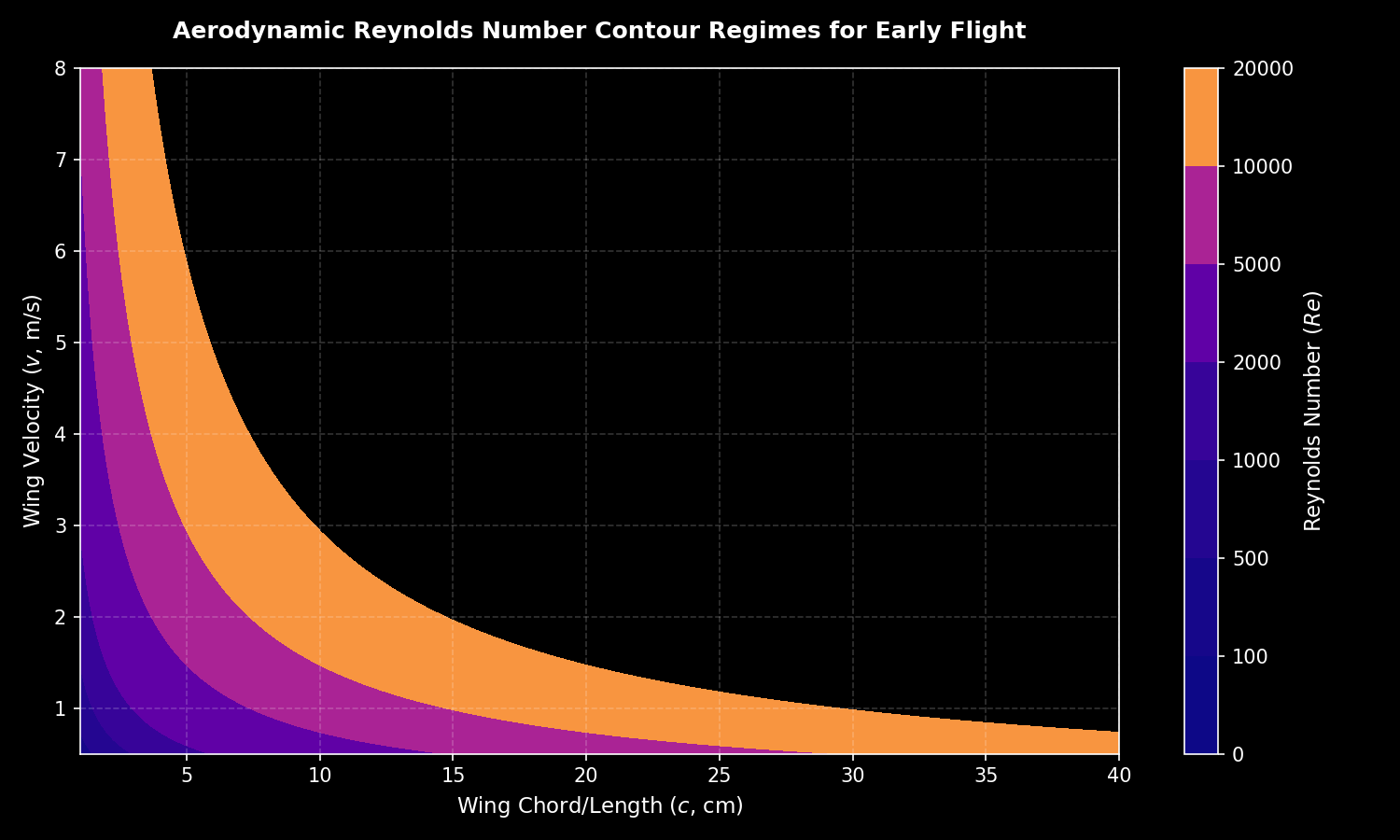
References & Sources
- Rhyniognatha — Wikipedia
- Engel, M. S. & Grimaldi, D. A. (2004). 'New light shed on the oldest insect.' Nature 427: 627-630.
- Misof, B., Liu, S., et al. (2014). 'Phylogenomics resolves the timing and pattern of insect evolution.' Science 346: 763-767.
- Haug, C. & Haug, J. T. (2017). 'The presumed oldest flying insect: more likely a myriapod?' PeerJ 5: e3402.
- Grimaldi, D. & Engel, M. S. (2005). Evolution of the Insects. Cambridge University Press.
- Schachat, S. R., et al. (2023). 'Illusion of flight? Absence, evidence and the age of winged insects.' Biological Journal of the Linnean Society 138: 143-168.