The Invention of the Wheel
c. 3500 BCE
A surprisingly late invention in human history.
Read the full sourced page: The Invention of the Wheel
The Turning Point: How a Rolling Disc Bent the Arc of History
The wheel is the rare invention so total that it has become a metaphor for invention itself. Yet its true significance lies not in the disc but in the disc joined to a fixed axle — a coupling so non-obvious that it arrived tens of thousands of years after fire, clothing, and art. Its story is a case study in how civilization compounds: a tool that could only emerge once a dense, settled, surplus-producing society existed, and which then accelerated everything that society became.
The Preconditions: Why So Late?
Nature offers almost no rolling wheels — biology favors legs, fins, and wings — so the wheel had no model to copy. It required deep prerequisites. First came the Agricultural Revolution (sv-agriculture), which anchored people in villages, generated grain surpluses worth hauling, and bred the draft animals — oxen and onagers — that would pull the first carts. It required metallurgy and woodworking precise enough to cut a round hole that gripped a turning shaft without binding. And it required the same concentration of specialists and demand that produced monumental ritual sites like Göbekli Tepe (sv-gobekli-tepe) and, soon after, the first cities. Tellingly, the wheel's earliest documented use was not transport at all but the potter's wheel, a craft tool of the same settled economy that later gave us writing in the form of Cuneiform (sv-cuneiform).
A Near-Simultaneous Eruption
Around the mid-fourth millennium BC, evidence for wheeled vehicles appears almost at once across Mesopotamia, the Northern Caucasus (the Maykop culture), and Central Europe — a pattern scholars still debate as single origin versus rapid diffusion. The oldest surviving wheel, the Ljubljana Marshes Wheel from present-day Slovenia, radiocarbon-dates to roughly 3150 BC. Whether the idea spread from one Sumerian workshop or flickered into life along a connected web of late-Neolithic societies, its diffusion proves these cultures were already linked by trade and contact — the same networks whose later collapse we read in the Late Bronze Age Collapse (sv-bronze-collapse).
Ripples Across the Millennia
Once load-bearing wheels existed, the leverage they offered cascaded through history. They moved the limestone and labor that raised the Great Pyramids of Giza (sv-pyramids). Mounted on the spoked, light war-chariot — a refinement of the solid disc — they redrew the map of power, as at the chariot-massed clash of the Battle of Kadesh (sv-battle-kadesh). As a pure mechanical principle, the wheel-and-axle became one of antiquity's simple machines, the conceptual seed of the gears and levers theorized by Archimedes of Syracuse (sv-archimedes) and of the geared world that followed.
The wheel's deepest legacy is recursive: every later machine that turns is its descendant. The Gutenberg Press (sv-printing-press) pressed type with a screw-and-platen mechanism inherited from wine and olive presses, themselves wheel-and-axle devices; the rotating shafts and flywheels of the Industrial Revolution (sv-industrial-revolution) are wheels harnessed to steam; and the assembly line that built Henry Ford & the Model T (sv-henry-ford) was, literally and figuratively, the wheel scaled to mass production. The dynamo at the heart of modern power — born with Michael Faraday & Electromagnetic Induction (sv-michael-faraday) — is a wheel spinning through a magnetic field.
Seen across the full timeline, the wheel marks the moment human technology began to multiply force rather than merely apply it. Where earlier tools extended the hand, the wheel extended leverage itself — storing, redirecting, and amplifying effort. That principle of compounding advantage, of each turn building on the last, is the same logic that later thinkers would name the Law of Accelerating Returns (sv-kurzweil-law). The first cart creaking out of a Sumerian marsh and the recursive self-improvement imagined for AGI sit on a single continuous curve: intelligence learning, again and again, how to make the world turn in its favor.
Global Context
The wheel-and-axle complex appears in the late 5th to mid-4th millennium BCE, deep in the Copper Age (Chalcolithic). In Mesopotamia, Uruk was swelling into the world's first true city; the potter's wheel was already spinning clay, and proto-cuneiform accounting was about to emerge. In Egypt, Naqada II culture was consolidating toward dynastic unification under Narmer (c. 3100 BCE). The Tripolye-Cucuteni mega-settlements of Ukraine and the Pontic-Caspian steppe pastoralists (later Yamnaya) were domesticating the horse and herding cattle. In the Carpathians and Balkans, metallurgists were mining and smelting copper at sites like Rudna Glava. Megalithic building was underway in Atlantic Europe; rice and millet farming spread across China during the Liangzhu and Yangshao horizons. The near-simultaneous appearance of wheel evidence across Mesopotamia (Bronocice pot, c. 3500 BCE), the North European Plain (Flintbek wheel-ruts), the Alps (Ljubljana Marshes wheel, c. 3200 BCE), and the steppe places the innovation within a tightly connected Eurasian Chalcolithic world.
The Paradigm Shift
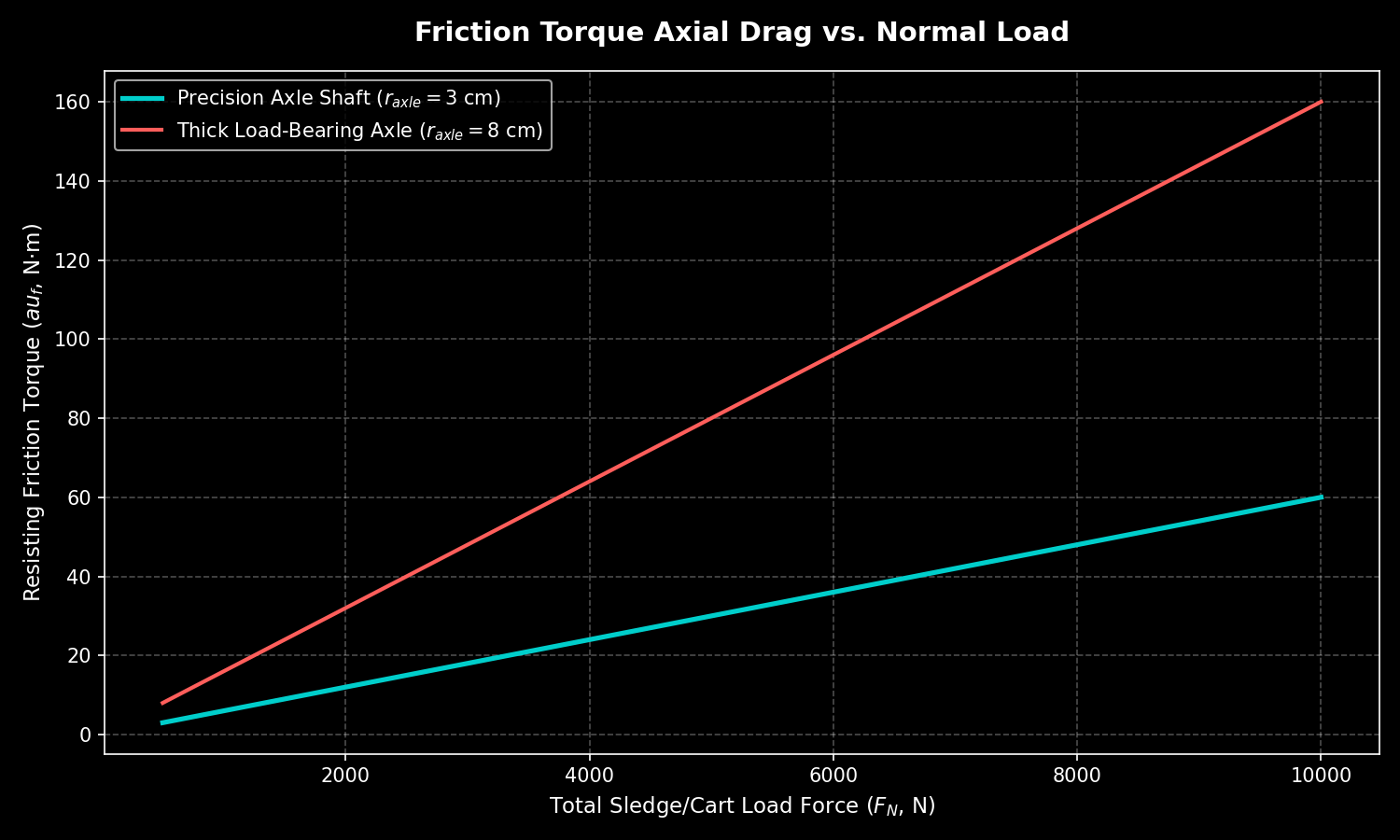
The wheel's true novelty was not the disc but the wheel-and-axle bearing—a low-friction rotary joint demanding fine tolerances, hard wood, and metal tools to bore the hub. This solved a problem absent in nature, where no macroscopic organism rolls on a free-spinning axle. Once combined with the draft ox (yoked from c. 4000 BCE), it multiplied the load a human economy could move overland, enabling surplus transport, bulk trade, deeper mining, and eventually the war chariot that reshaped Bronze Age states from the Hittites to the Shang. David Anthony argues the wheeled wagon let Pontic-Caspian herders exploit the open steppe, underwriting the dispersal of Indo-European languages. Beyond transport, rotary motion became a generative principle: the potter's wheel, spindle, lathe, water-wheel, gear, pulley, and ultimately the turbine and the wheel as abstract symbol (fortune, dharma, cyclical time). It is among the clearest cases of a single mechanical concept seeding millennia of derivative technology.
Counterfactual: What If It Had Gone Differently
Counterfactual reasoning here is constrained by a striking natural experiment: Mesoamerican and Andean civilizations never adopted functional transport wheels, despite producing wheeled ceramic figurines (Veracruz, c. 1500 BCE–CE 1) that prove the concept was known. The plausible explanation—the absence of suitable draft animals and rugged terrain—suggests the wheel is not inevitable but environmentally contingent. The Inca built a continental road system and empire using llama caravans and human porters alone, and Saharan and much of Near Eastern transport later reverted to the camel, displacing the cart for over a millennium (Richard Bulliet, The Camel and the Wheel). Had the Eurasian wheel-and-axle never emerged, bulk overland trade and deep mining would have remained costlier, likely slowing steppe pastoral expansion and delaying the chariot warfare that defined the second-millennium BCE. Yet the Andean case warns against techno-determinism: complex states, monumental architecture, and long-distance exchange demonstrably arose without wheels, so its absence would have reshaped, not foreclosed, civilization.
Scholarly Debate
The central debate is geographic origin and single-versus-multiple invention. One camp locates the wheel in Mesopotamia/the Near East, citing the potter's wheel and the earliest pictographic vehicle signs. A second, advanced by David W. Anthony (The Horse, the Wheel, and Language, 2007), uses linguistic palaeontology: the reconstructed Proto-Indo-European wheel vocabulary (e.g. kʷékʷlos "wheel," from kʷel- "to turn," plus terms for axle, thill, and "to convey") appears across nearly all Indo-European branches, implying the wheel was known to PIE speakers c. 3500 BCE on the Pontic-Caspian steppe and spread rapidly thereafter. A newer hypothesis (Alacoque, James & Bulliet, Royal Society Open Science, 2024) uses computational structural design to argue the wheel-and-axle evolved from grooved rollers among Carpathian copper miners around 3900 BCE. Most scholars now favor rapid diffusion of a single complex over fully independent Eurasian inventions, given the near-synchronous finds, while treating the Mesoamerican wheeled figurines as a genuinely separate, non-transport invention.
How It Connects
What Made It Possible
- Neolithic peoples had long moved heavy loads on sledges and atop wooden rollers (limbed logs laid in series), and the gradual transition from dragging to rolling is widely seen as the conceptual seedbed from which the rotating wheel emerged.
- The mastery of woodworking with sharp metal tools was a prerequisite: a wheel needed a nearly perfectly round, smooth axle fitting snugly yet freely through a round hub, a tolerance achievable only once copper chisels and gouges allowed precise carpentry, as David W. Anthony argues in 'The Horse, the Wheel, and Language.'
- Copper metallurgy and large-scale mining in Neolithic Europe created both the tools and the practical need: a 2024 study in Royal Society Open Science by Alacoque, Bulliet, and James models the wheel-and-axle as an adaptation of rollers used to haul ore through the narrow tunnels of Carpathian copper mines around 3900 BCE.
- The earlier development of the rotating potter's wheel demonstrated the principle of controlled rotary motion around a fixed point; a stone potter's wheel from Sumerian Ur dates to roughly 3129 BCE, with even older wheel-thrown pottery evidence in the region.
- The domestication of cattle (and later horses) provided the draft animal power needed to make wheeled wagons worthwhile for hauling loads heavier than a person could push.
- Settled agricultural societies of the late Neolithic generated surpluses of grain, ore, timber, and harvest that had to be transported in bulk, supplying the economic incentive to develop load-bearing wheeled vehicles.
Its Legacy
- Wheeled wagons and carts made bulk overland transport of grain, goods, and building materials feasible, a shift documented by the earliest known depiction of a four-wheeled wagon on the Bronocice pot from Funnelbeaker-culture Poland, dated to roughly 3500-3350 BCE.
- The development of the lighter spoked wheel in the Near East and Central Asia around 2000 BCE enabled the horse-drawn chariot, which became the dominant weapon of war across Egypt, the ancient Near East, China, and Europe by about 1800-1500 BCE.
- The principle of rotary motion mastered in the wheel was extended to the waterwheel and windmill, allowing humans to harness river and wind energy to grind grain, saw timber, and drive machinery.
- Rotary machine elements such as gears, pulleys, and rotating shafts derive from the wheel-and-axle and became the foundational components of mechanized industry.
- Water wheels powering textile, grist, and saw mills became a primary energy source of the early Industrial Revolution, mechanizing production before the steam engine.
- The wheel underpins nearly all subsequent ground transport and rotating machinery, from the spinning wheel and cartwheel to railway locomotives, the automobile, and the turbines and rotors of modern engineering.
Myth vs. Reality
Myth: Cavemen invented the wheel; it was one of humanity's first and earliest inventions.
Reality: The wheel is a surprisingly late invention. The oldest known examples date to roughly 3500 BCE, in the Copper Age (Chalcolithic), long after the Stone Age and well after agriculture, herding, and the first towns. Many technologies predate it by thousands of years, including sewing needles, woven cloth, rope, basket-weaving, boats, and even musical instruments like the flute. By the time the wheel appeared, humans were already farming, smelting copper, and building permanent settlements.
Myth: The first wheels were invented to move people and goods around (carts and chariots).
Reality: The earliest wheels were most likely potter's wheels, used to throw clay vessels, rather than vehicle wheels. The wheel-and-axle combination needed to make a rolling cart came later. The first clear evidence of wheeled vehicles appears in the second half of the 4th millennium BCE, with the Bronocice pot from Poland (c. 3635-3370 BCE) bearing what is considered the earliest well-dated depiction of a wheeled wagon, and the wooden Ljubljana Marshes Wheel from Slovenia (c. 5,150 years old) being the oldest surviving wooden wheel.
Myth: The genius of the wheel is the round wheel itself, which someone figured out by watching logs or boulders roll.
Reality: Scholars argue the conceptually hard part was not the rolling disc but the fixed axle. As archaeologist David W. Anthony (author of The Horse, the Wheel, and Language) and engineers have noted, the wheel-and-axle had to be machined with great precision: the axle ends and the wheel-holes needed to be smooth and round, fitted snugly enough to bear weight but loose enough to spin freely, and the axle had to be exactly the right thickness to avoid either breaking or generating crippling friction. This all-or-nothing precision likely required metal woodworking tools, which is part of why the wheel arrived so late.
Myth: Pre-Columbian peoples in the Americas never discovered the wheel.
Reality: Mesoamerican cultures clearly understood the wheel-and-axle principle. Archaeologists have recovered numerous wheeled ceramic figurines, often little animals on rolling axles, some dating back well over two thousand years. The wheel was simply never adopted for transport, largely because the Americas lacked large domesticable draft animals to pull carts and because much of the terrain was mountainous, forested, or swampy. People instead used llamas, human porters, and sledges.
Myth: A single inventor had a 'eureka' moment and invented the wheel, which then spread from one place.
Reality: There was no lone inventor, and the single-origin-versus-independent-invention question is still genuinely debated among scholars. The wheel was not a single device but a family of innovations developed over time, the roller, the potter's wheel, the wheeled vehicle, and later the spoked wheel. Wheeled-vehicle evidence appears nearly simultaneously across Mesopotamia, the North Caucasus (Maykop culture), and Eastern Europe in the late 4th millennium BCE, and linguistic evidence such as a shared Proto-Indo-European root for 'wheel' factors into the ongoing debate rather than settling it.
In Their Words
"The PIE vocabulary for wheeled vehicles ... contained at least five terms ... a noun and verb for the wheel (kʷékʷlos and kʷel-), a noun for axle (aks-), a noun for thill or wagon-pole (h₂éyos), and a verb that meant 'to convey or go in a vehicle' (*weǵ-)." — David W. Anthony, The Horse, the Wheel, and Language: How Bronze-Age Riders from the Eurasian Steppes Shaped the Modern World (Princeton University Press, 2007), ch. 4.
Data Visualization
References & Sources
- Wheel — Wikipedia
- David W. Anthony, The Horse, the Wheel, and Language: How Bronze-Age Riders from the Eurasian Steppes Shaped the Modern World (Princeton University Press, 2007)
- Richard W. Bulliet, The Camel and the Wheel (Harvard University Press, 1975)
- Lee Alacoque, Kai James & Richard W. Bulliet, 'Reconstructing the invention of the wheel using computational structural analysis and design,' Royal Society Open Science 11 (2024): 240373
- Stuart Piggott, The Earliest Wheeled Transport: From the Atlantic Coast to the Caspian Sea (Cornell University Press, 1983)
- Anne Crône & Richard Bradley et al. / Maja Velušček, reports on the Ljubljana Marshes Wheel (Arheološki vestnik, 2009)