Athanasius of Alexandria
The immovable bishop who defined the Trinity—and the biblical canon.
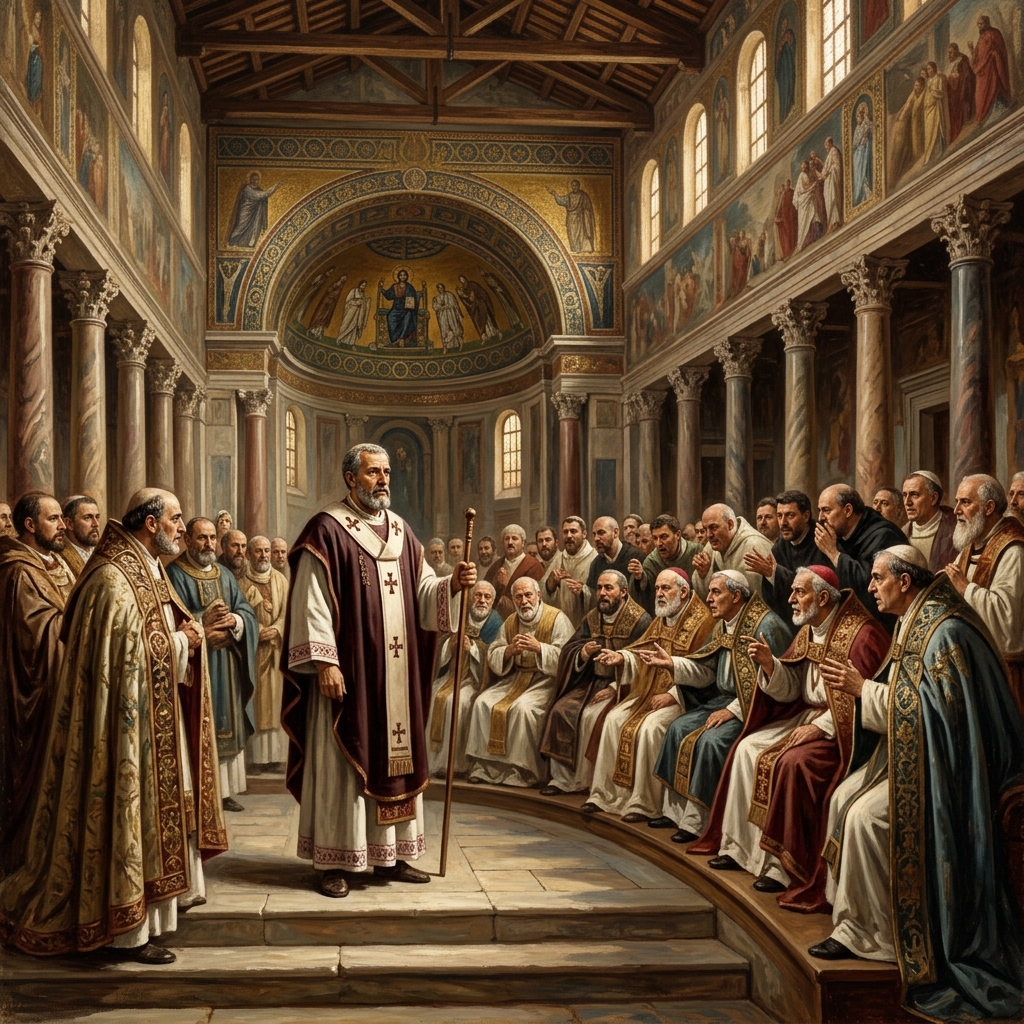
Bishop of Alexandria and the most relentless defender of Nicene Trinitarianism against the Arian heresy. Exiled five times by four different Roman emperors for his theological stubbornness, he is famous for the phrase "Athanasius contra mundum" (Athanasius against the world).
Open in interactive timeline →Verified Facts
- His 39th Festal Letter (367 CE) contains the earliest known list of the 27 books of the New Testament that exactly matches the modern Protestant canon. This is the single most important document in the history of the biblical canon.
- He fought the Arian controversy for decades. Arius taught that Jesus was created by God ("there was a time when the Son was not"). Athanasius insisted the Son was co-eternal and co-equal with the Father—the position that ultimately won at Nicaea.
- He was exiled five times for a total of 17 years by emperors who favored Arianism, yet he outlasted every one of them and returned to his bishopric each time.
- His biography of St. Anthony ("Life of Anthony") essentially invented the genre of Christian hagiography and was enormously influential in popularizing monasticism across the Roman world.
Frequently Asked Questions
Who was Athanasius of Alexandria?
Bishop of Alexandria and the most relentless defender of Nicene Trinitarianism against the Arian heresy. Exiled five times by four different Roman emperors for his theological stubbornness, he is famous for the phrase "Athanasius contra mundum" (Athanasius against the world).
When did Athanasius of Alexandria live?
Athanasius of Alexandria: c. 296–373 CE.
Why does Athanasius of Alexandria matter?
The immovable bishop who defined the Trinity—and the biblical canon.
Sources & Further Reading
Cite This Page
AskHistoryAI. “Athanasius of Alexandria.” AskHistoryAI — Interactive Timeline of Everything. Updated 2026-09-11. https://askhistoryai.com/event/cf-athanasius/
Every fact on this page is checked against the published fact ledger and methodology; sources are listed above.