The Elevator Safety Brake
The invention that built the modern city.
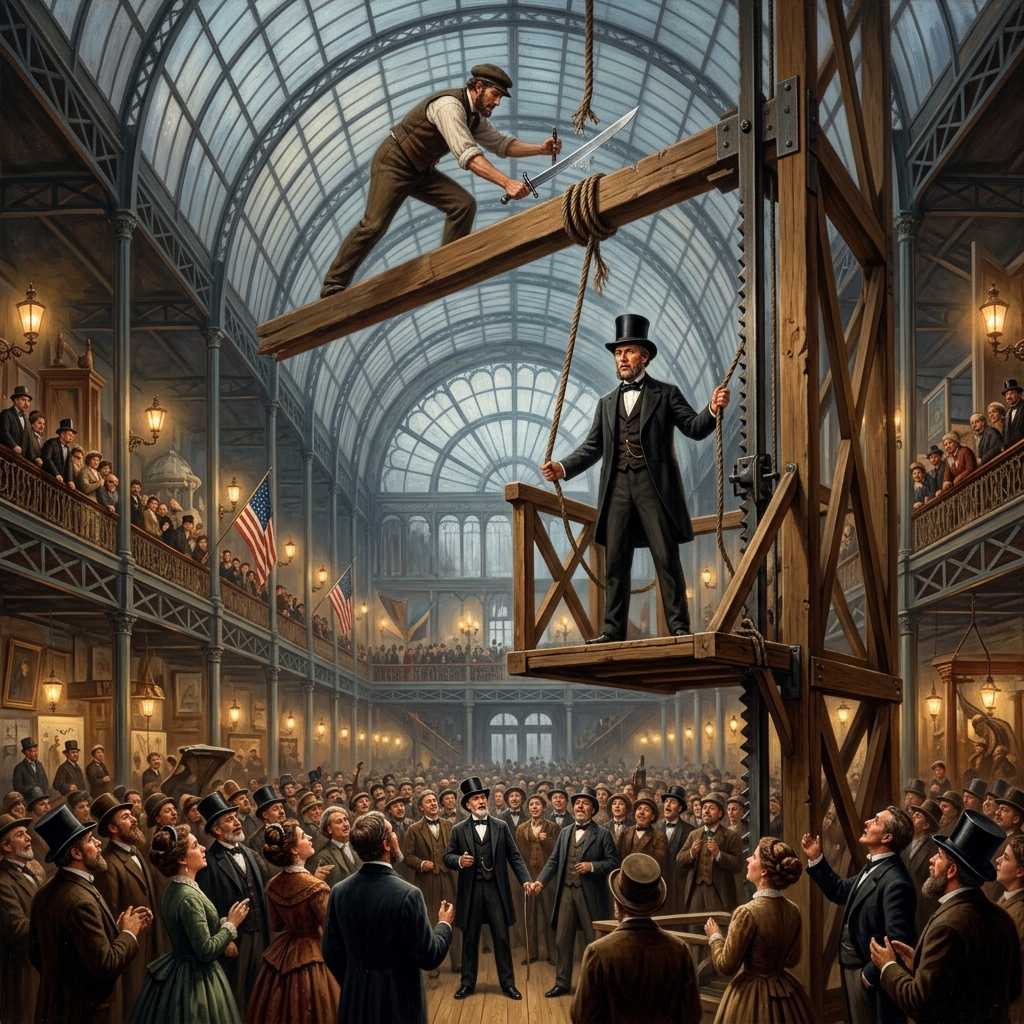
While hoist elevators existed for centuries, they were incredibly dangerous—if the main rope broke, the carriage plummeted. Elisha Otis invented a safety brake that automatically locked the carriage in place if the rope snapped, completely changing urban architecture.
Open in interactive timeline →Verified Facts
- Otis dramatically proved his invention at the 1854 New York Crystal Palace by standing on an elevator platform high in the air and having an assistant cut the only rope holding him up.
- Before this invention, buildings were rarely taller than 5 stories because people refused to climb that many stairs. The top floors were the cheapest, worst apartments.
- By making vertical transportation safe, Otis birthed the skyscraper, fundamentally creating the high-density urban city centers we know today (and making penthouses the most expensive real estate).
Frequently Asked Questions
What was The Elevator Safety Brake?
While hoist elevators existed for centuries, they were incredibly dangerous—if the main rope broke, the carriage plummeted. Elisha Otis invented a safety brake that automatically locked the carriage in place if the rope snapped, completely changing urban architecture.
When did The Elevator Safety Brake happen?
The Elevator Safety Brake: 1852 CE.
Why does The Elevator Safety Brake matter?
The invention that built the modern city.
Sources & Further Reading
Cite This Page
AskHistoryAI. “The Elevator Safety Brake.” AskHistoryAI — Interactive Timeline of Everything. Updated 2026-09-11. https://askhistoryai.com/event/inv-elevator/
Every fact on this page is checked against the published fact ledger and methodology; sources are listed above.