The First Photograph
Capturing the physical world on a metal plate.
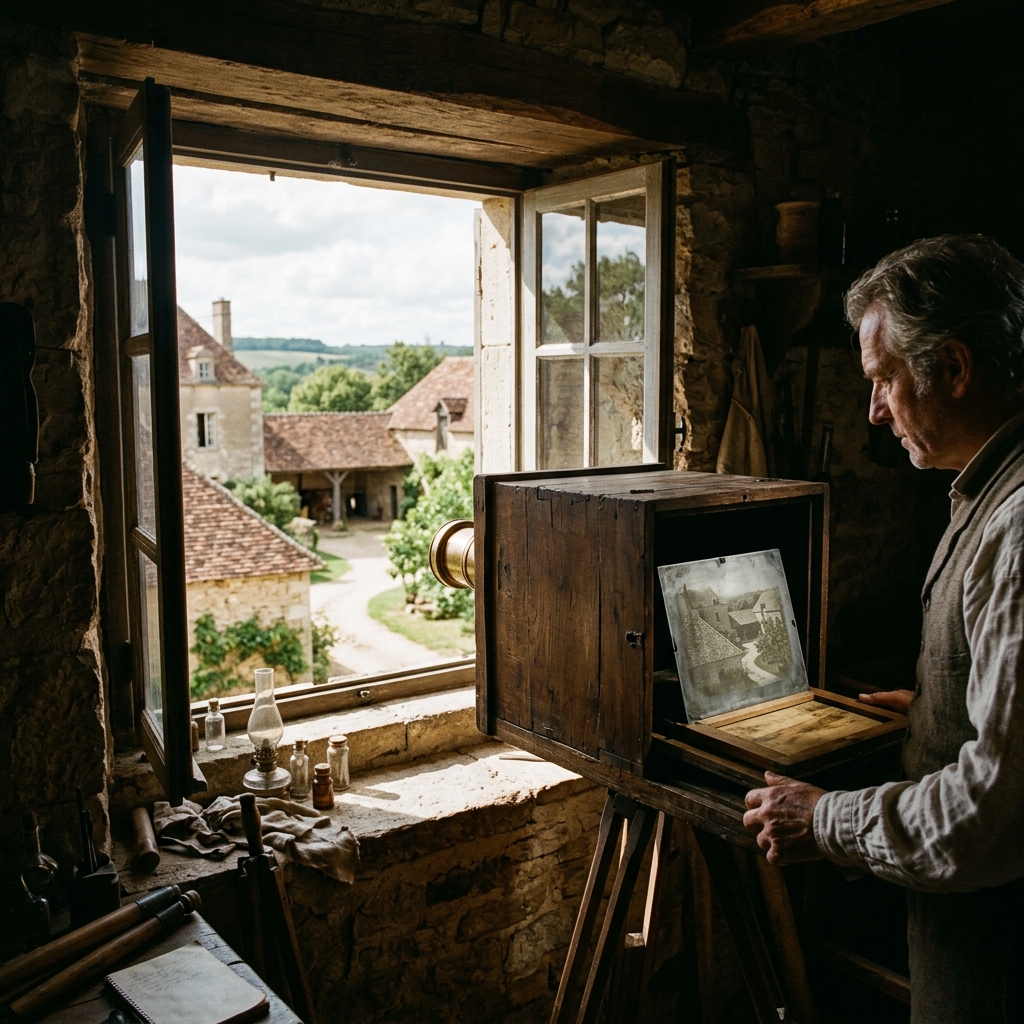
French inventor Nicéphore Niépce successfully created the first permanent photographic image, "View from the Window at Le Gras." Using a camera obscura, he exposed a pewter plate coated in a light-sensitive derivative of petroleum (bitumen of Judea).
Open in interactive timeline →Verified Facts
- The exposure time required to capture this first image was incredibly long—estimated to be anywhere from 8 hours to several days in the bright sun.
- Because the exposure took so long, sunlight illuminates the buildings on both the left and right sides of the photograph as the sun moved across the sky.
- Niépce later partnered with Louis Daguerre, who would go on to invent the much faster, commercially viable "Daguerreotype" process.
Frequently Asked Questions
What was The First Photograph?
French inventor Nicéphore Niépce successfully created the first permanent photographic image, "View from the Window at Le Gras." Using a camera obscura, he exposed a pewter plate coated in a light-sensitive derivative of petroleum (bitumen of Judea).
When did The First Photograph happen?
The First Photograph: c. 1826-1827 CE.
Why does The First Photograph matter?
Capturing the physical world on a metal plate.
Sources & Further Reading
Cite This Page
AskHistoryAI. “The First Photograph.” AskHistoryAI — Interactive Timeline of Everything. Updated 2026-09-11. https://askhistoryai.com/event/inv-first-photo/
Every fact on this page is checked against the published fact ledger and methodology; sources are listed above.