The Watt Steam Engine
The heart of the Industrial Revolution.
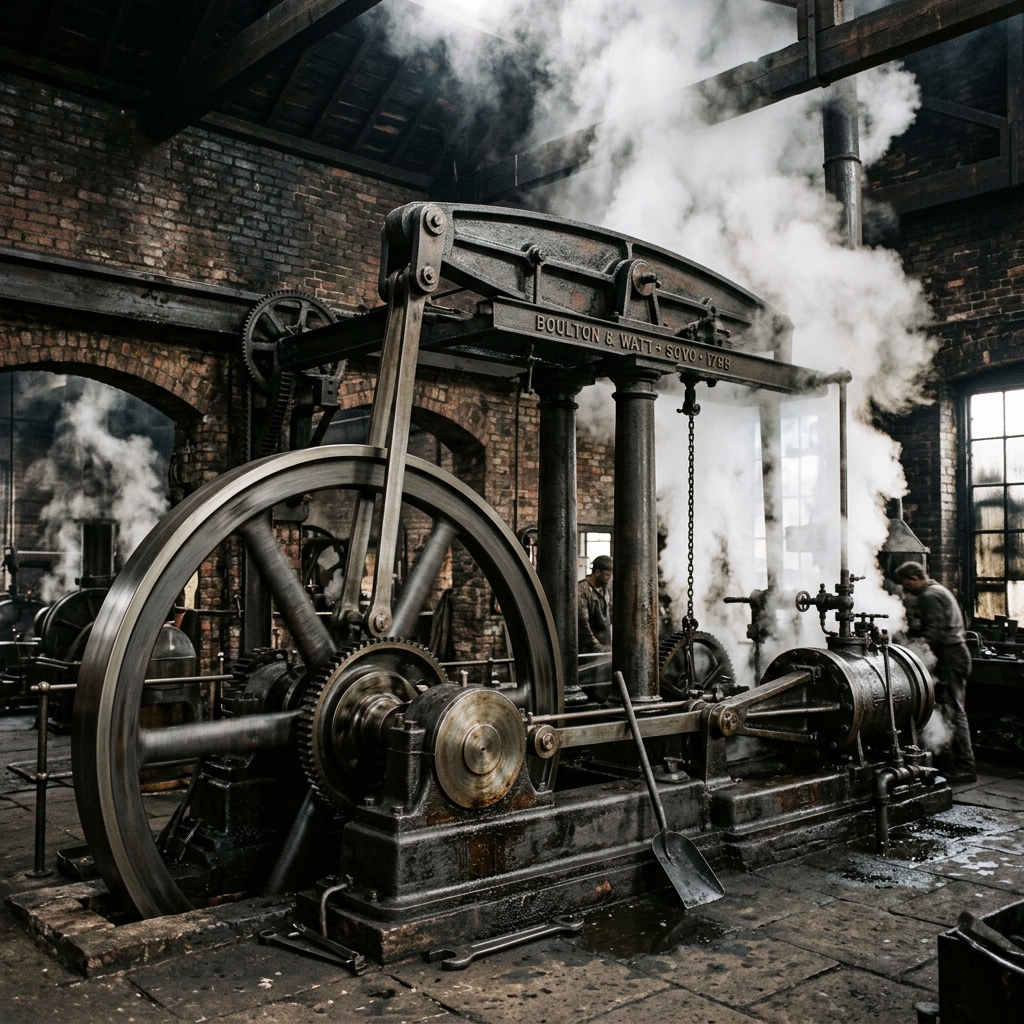
While Thomas Newcomen invented an early steam engine to pump water out of mines, James Watt fundamentally improved it by adding a separate condenser. This vastly increased its efficiency and allowed it to drive rotary machinery, kicking off the Industrial Revolution.
Open in interactive timeline →Verified Facts
- For thousands of years, human civilization relied entirely on muscle power (humans and animals), wind, and falling water. The steam engine allowed factories to be built anywhere, powered by fossil fuels.
- The massive increase in manufacturing capability led to the rise of modern capitalism, urbanization, and unprecedented global economic growth.
- Watt coined the term "horsepower" specifically to market his engines to farmers and miners, explaining exactly how many horses his machine could replace.
Frequently Asked Questions
What was The Watt Steam Engine?
While Thomas Newcomen invented an early steam engine to pump water out of mines, James Watt fundamentally improved it by adding a separate condenser. This vastly increased its efficiency and allowed it to drive rotary machinery, kicking off the Industrial Revolution.
When did The Watt Steam Engine happen?
The Watt Steam Engine: 1776 CE.
Why does The Watt Steam Engine matter?
The heart of the Industrial Revolution.
Sources & Further Reading
Cite This Page
AskHistoryAI. “The Watt Steam Engine.” AskHistoryAI — Interactive Timeline of Everything. Updated 2026-09-11. https://askhistoryai.com/event/inv-steam-engine/
Every fact on this page is checked against the published fact ledger and methodology; sources are listed above.