The Gutenberg Printing Press
The mass production of knowledge.
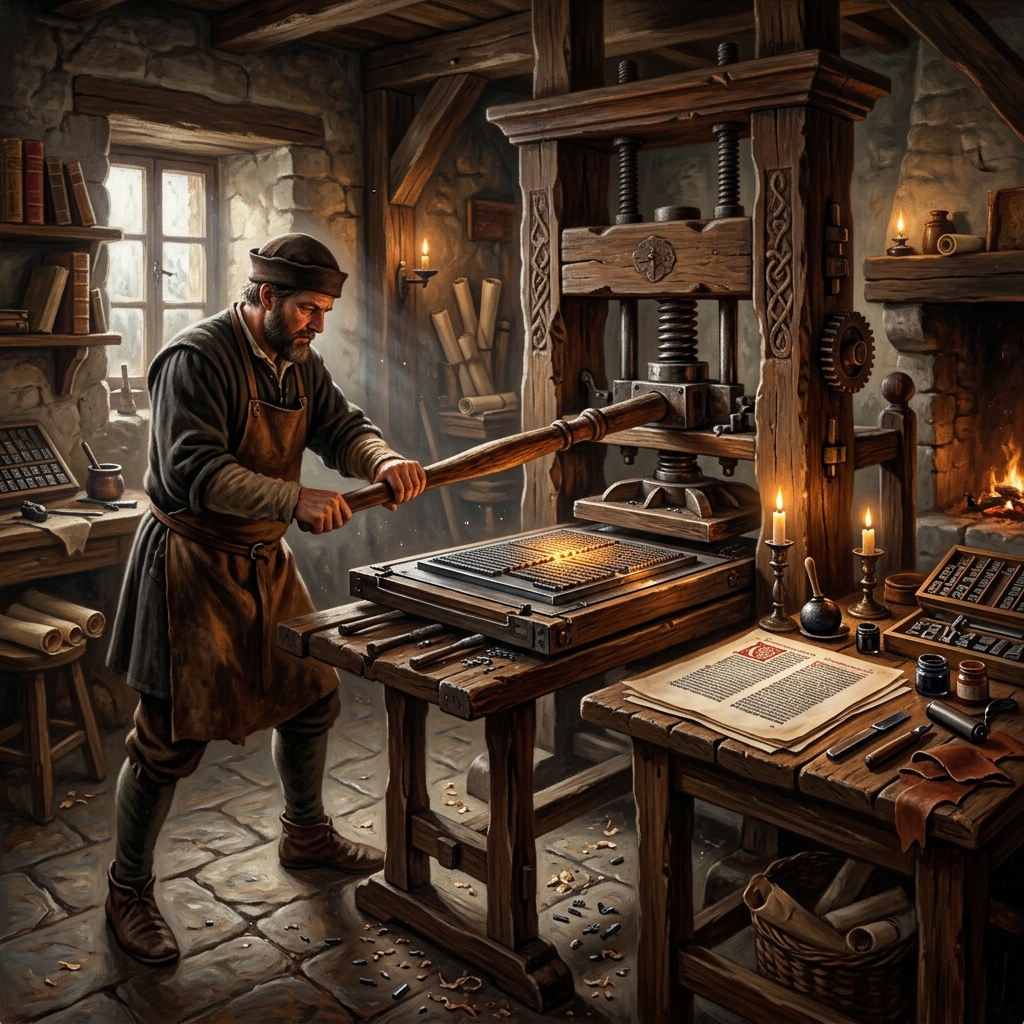
Johannes Gutenberg invented the mechanical movable-type printing press in Europe. By adapting the screw mechanisms used in wine and olive presses, he made it possible to rapidly and cheaply mass-produce books, breaking the monopoly of knowledge held by the elite.
Open in interactive timeline →Verified Facts
- Before the printing press, a single book had to be hand-copied by monks over months or years, making them incredibly rare and expensive.
- The first major book printed using mass-produced movable metal type was the "Gutenberg Bible" in 1455.
- This invention directly fueled the Renaissance, the Scientific Revolution, and the Protestant Reformation by allowing radical new ideas to spread faster than authorities could suppress them.
Frequently Asked Questions
What was The Gutenberg Printing Press?
Johannes Gutenberg invented the mechanical movable-type printing press in Europe. By adapting the screw mechanisms used in wine and olive presses, he made it possible to rapidly and cheaply mass-produce books, breaking the monopoly of knowledge held by the elite.
When did The Gutenberg Printing Press happen?
The Gutenberg Printing Press: 1440 CE.
Why does The Gutenberg Printing Press matter?
The mass production of knowledge.
Sources & Further Reading
Cite This Page
AskHistoryAI. “The Gutenberg Printing Press.” AskHistoryAI — Interactive Timeline of Everything. Updated 2026-09-11. https://askhistoryai.com/event/inv-printing-press/
Every fact on this page is checked against the published fact ledger and methodology; sources are listed above.