The Analytical Engine
The Victorian steampunk computer that was a century ahead of its time.
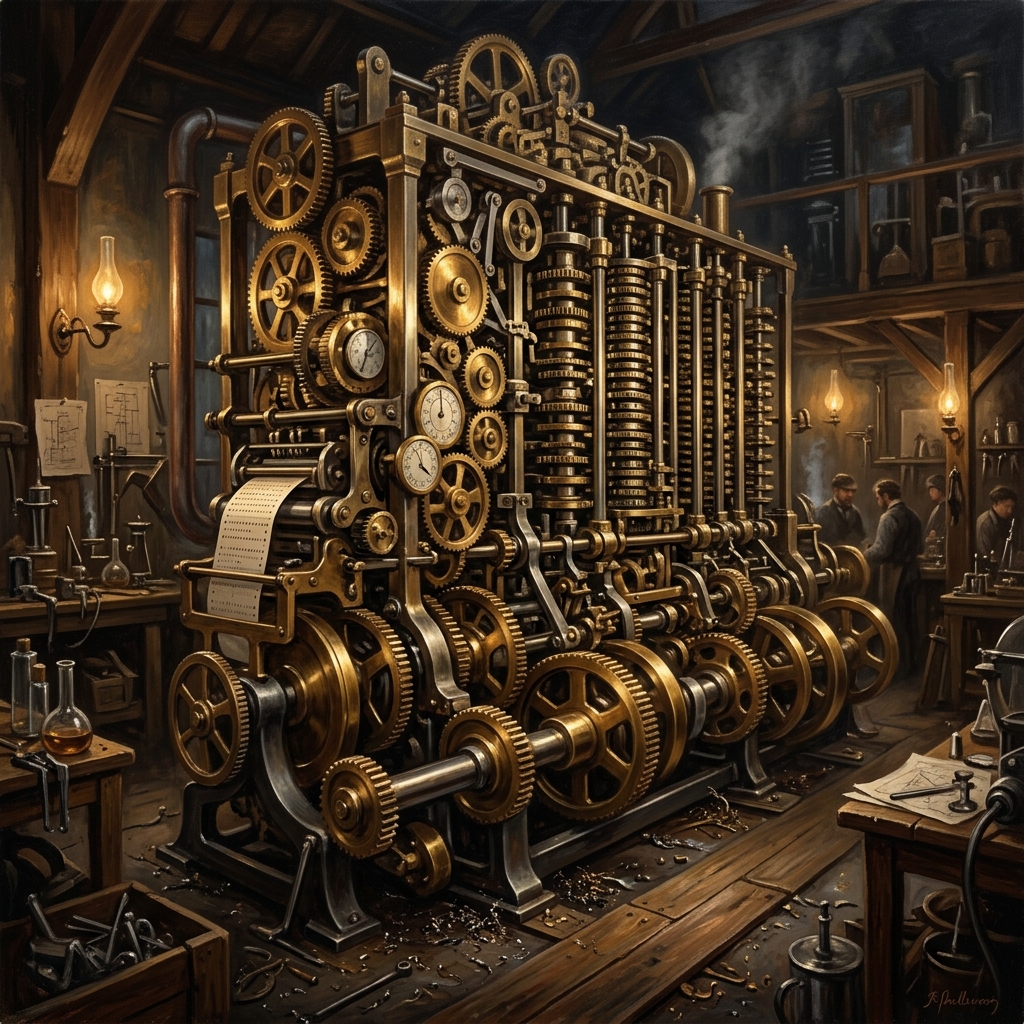
Designed by English mathematician Charles Babbage, the Analytical Engine was the first design for a mechanical, general-purpose computer. It featured an ALU (arithmetic logic unit), conditional branching, loops, and integrated memory, making it the first Turing-complete design in history.
Open in interactive timeline →Verified Facts
- It was designed to be powered by a steam engine and would have been the size of a locomotive. Due to funding issues and the limits of Victorian machining, it was never completed during his lifetime.
- Ada Lovelace wrote the first algorithm intended to be executed by this machine, making her the world's first computer programmer.
- It used Jacquard punch cards for input and was designed to output to a printer, a curve plotter, and a bell.
Frequently Asked Questions
What was The Analytical Engine?
Designed by English mathematician Charles Babbage, the Analytical Engine was the first design for a mechanical, general-purpose computer. It featured an ALU (arithmetic logic unit), conditional branching, loops, and integrated memory, making it the first Turing-complete design in history.
When did The Analytical Engine happen?
The Analytical Engine: 1837 CE.
Why does The Analytical Engine matter?
The Victorian steampunk computer that was a century ahead of its time.
Sources & Further Reading
Cite This Page
AskHistoryAI. “The Analytical Engine.” AskHistoryAI — Interactive Timeline of Everything. Updated 2026-09-11. https://askhistoryai.com/event/tech-analytical-engine/
Every fact on this page is checked against the published fact ledger and methodology; sources are listed above.