Ada Lovelace: The First Programmer
The visionary who realized computers could do more than just math.
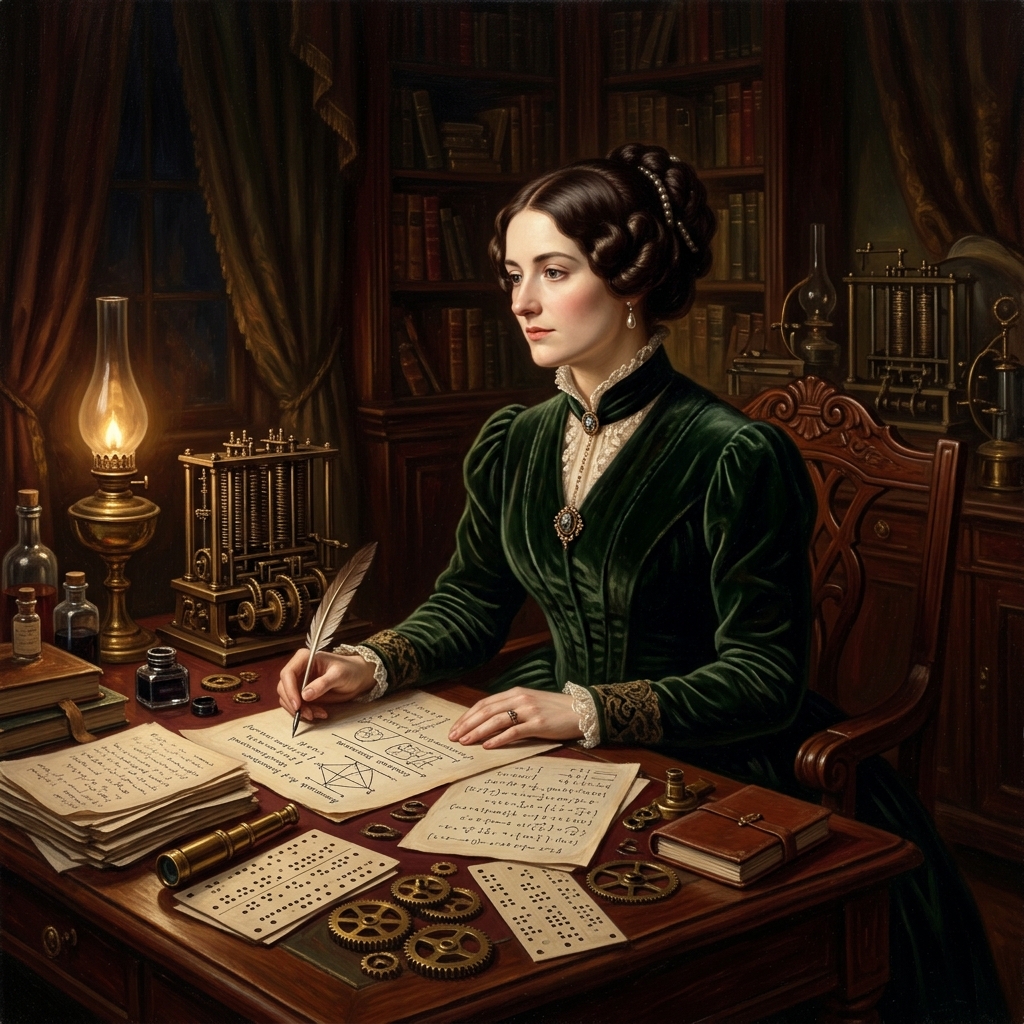
While translating an article on Charles Babbage's Analytical Engine, Ada Lovelace added extensive notes of her own. In "Note G," she wrote an algorithm for the machine to compute Bernoulli numbers, which is widely recognized as the world's first published computer program.
Open in interactive timeline →Verified Facts
- She was the only legitimate child of the famous "mad, bad, and dangerous to know" poet Lord Byron.
- While Babbage saw his machine purely as a massive calculator for numbers, Lovelace was the first to realize that if numbers could represent other things (like letters or musical notes), the machine could manipulate any data. This was a 100-year leap in theoretical computer science.
- The US Department of Defense named the "Ada" programming language in her honor in 1980.
Frequently Asked Questions
What was Ada Lovelace: The First Programmer?
While translating an article on Charles Babbage's Analytical Engine, Ada Lovelace added extensive notes of her own. In "Note G," she wrote an algorithm for the machine to compute Bernoulli numbers, which is widely recognized as the world's first published computer program.
When did Ada Lovelace: The First Programmer happen?
Ada Lovelace: The First Programmer: 1843 CE.
Why does Ada Lovelace: The First Programmer matter?
The visionary who realized computers could do more than just math.
Sources & Further Reading
Cite This Page
AskHistoryAI. “Ada Lovelace: The First Programmer.” AskHistoryAI — Interactive Timeline of Everything. Updated 2026-09-11. https://askhistoryai.com/event/tech-lovelace/
Every fact on this page is checked against the published fact ledger and methodology; sources are listed above.