The Electroencephalogram (EEG)
Reading the electrical static of the mind.
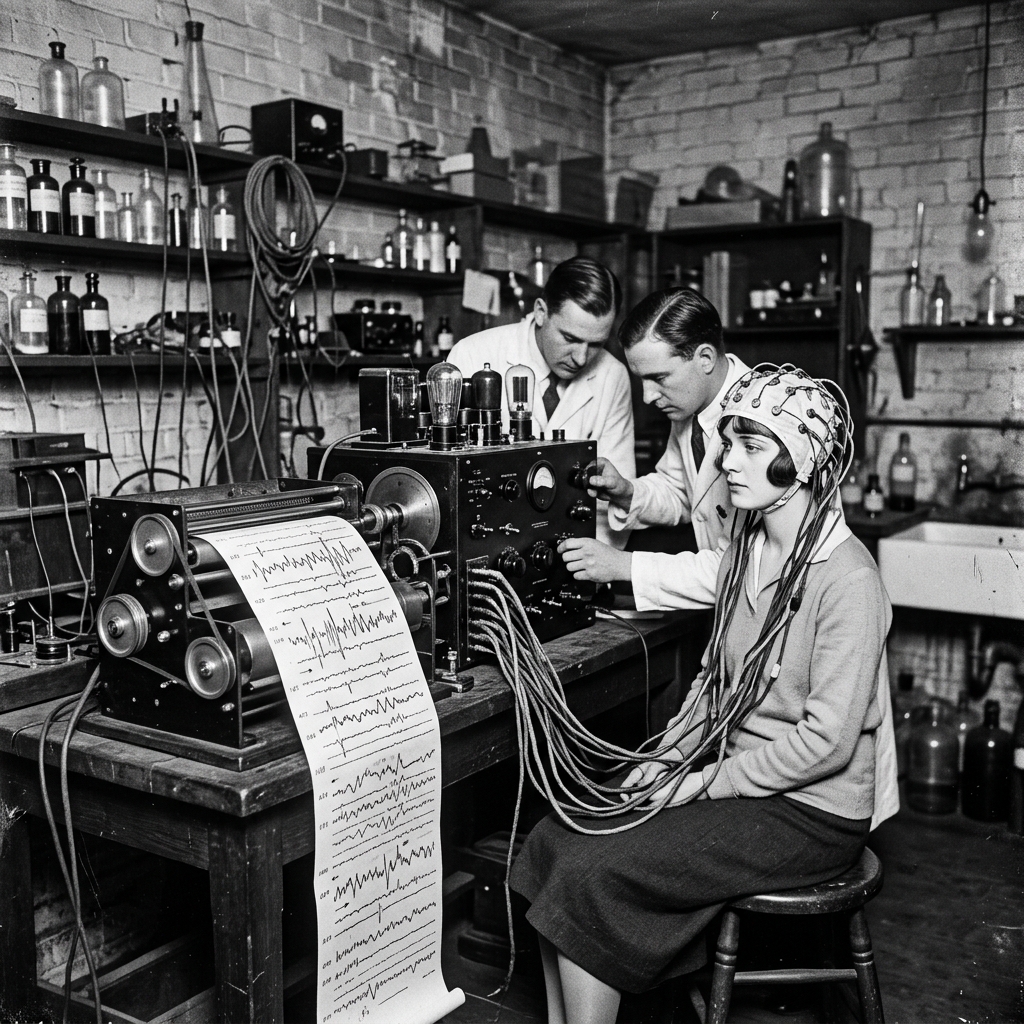
German psychiatrist Hans Berger recorded the first human electroencephalogram (EEG). For the very first time, humanity proved that the brain generates measurable electrical currents, and we successfully intercepted them.
Open in interactive timeline →Verified Facts
- Berger attached silver wires to the scalps of his patients and recorded the voltage changes on photographic paper. He discovered the "alpha wave," which occurs when a person is awake with their eyes closed.
- At first, the medical community didn't believe his results, assuming the electrical noise was just artifact interference from the skin or surrounding environment.
- This was the absolute foundational step in neurotechnology, proving that human consciousness has a physical, electrical footprint that can be measured by machines.
Frequently Asked Questions
What was The Electroencephalogram (EEG)?
German psychiatrist Hans Berger recorded the first human electroencephalogram (EEG). For the very first time, humanity proved that the brain generates measurable electrical currents, and we successfully intercepted them.
When did The Electroencephalogram (EEG) happen?
The Electroencephalogram (EEG): 1924 CE.
Why does The Electroencephalogram (EEG) matter?
Reading the electrical static of the mind.
Sources & Further Reading
Cite This Page
AskHistoryAI. “The Electroencephalogram (EEG).” AskHistoryAI — Interactive Timeline of Everything. Updated 2026-09-11. https://askhistoryai.com/event/tech-eeg/
Every fact on this page is checked against the published fact ledger and methodology; sources are listed above.