The Atomic Age (Early Fission)
Unlocking the energy of the atom.
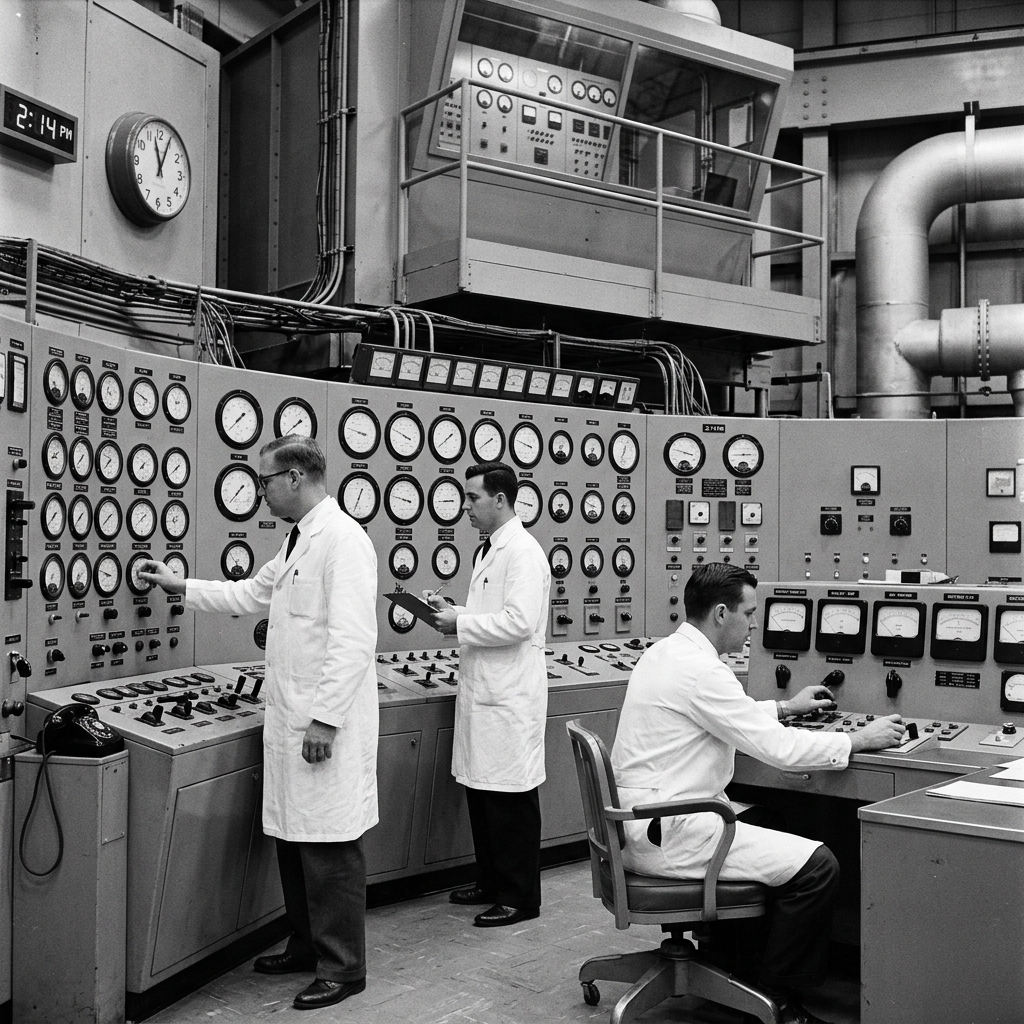
EBR-I (Experimental Breeder Reactor I) in Idaho became the first nuclear power plant to generate usable electricity, lighting up four 200-watt lightbulbs. It proved that controlled nuclear fission could provide massive, continuous power for civilization.
Open in interactive timeline →Verified Facts
- Before 1951, nuclear energy was exclusively viewed as a weapon of mass destruction following the Manhattan Project.
- Nuclear fission works by splitting heavy atoms (like Uranium) apart, releasing millions of times more energy per atom than burning fossil fuels like coal or gas.
- This kicked off the "Atomic Age," leading to the construction of massive commercial reactors that still provide about 10% of the world's electricity today.
Frequently Asked Questions
What was The Atomic Age (Early Fission)?
EBR-I (Experimental Breeder Reactor I) in Idaho became the first nuclear power plant to generate usable electricity, lighting up four 200-watt lightbulbs. It proved that controlled nuclear fission could provide massive, continuous power for civilization.
When did The Atomic Age (Early Fission) happen?
The Atomic Age (Early Fission): 1951 CE.
Why does The Atomic Age (Early Fission) matter?
Unlocking the energy of the atom.
Sources & Further Reading
Cite This Page
AskHistoryAI. “The Atomic Age (Early Fission).” AskHistoryAI — Interactive Timeline of Everything. Updated 2026-09-11. https://askhistoryai.com/event/tech-fission-early/
Every fact on this page is checked against the published fact ledger and methodology; sources are listed above.