UNIVAC I: The First Commercial Computer
When computing left the laboratory and entered the corporate world.
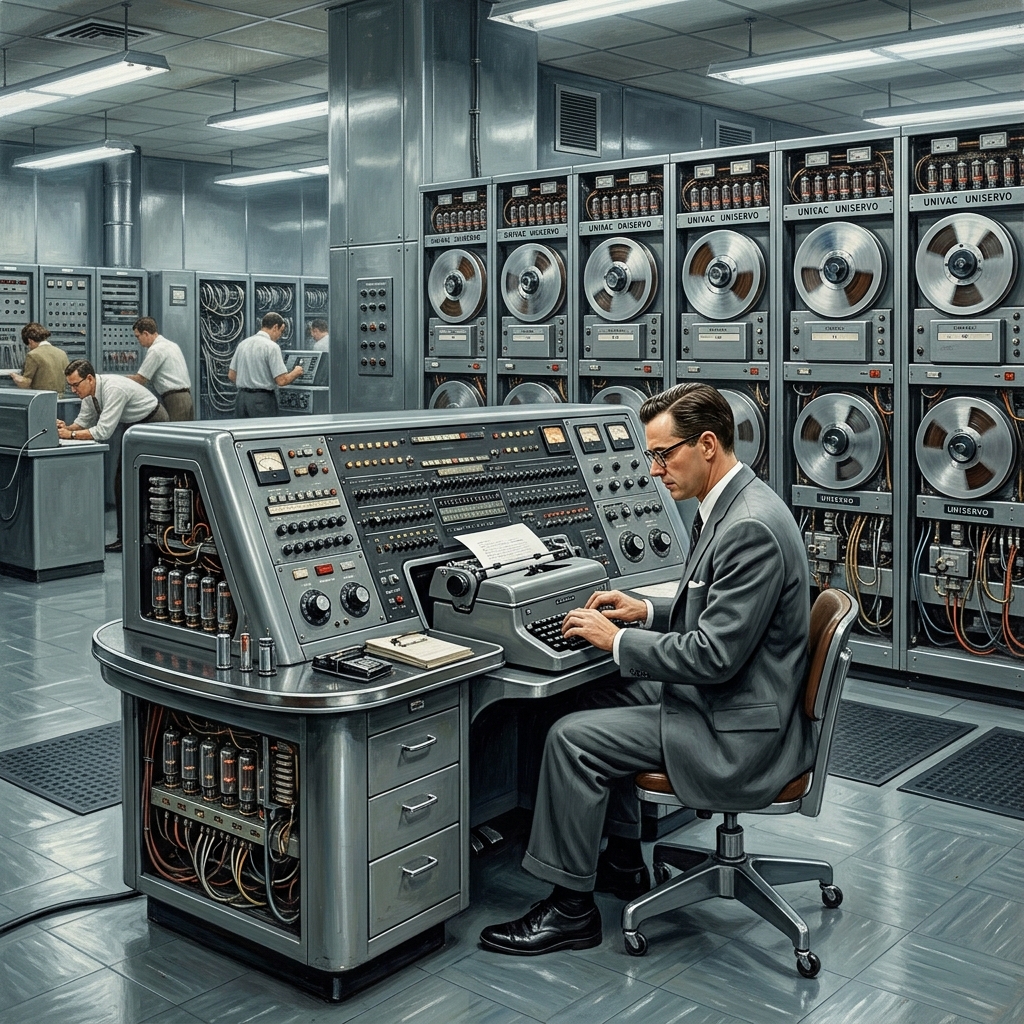
While the Ferranti Mark 1 narrowly beat it to market by one month in the UK, the UNIVAC I (Universal Automatic Computer) became the first widely publicized commercial computer in the United States, famously predicting the outcome of the 1952 presidential election on national television.
Open in interactive timeline →Verified Facts
- It was designed by J. Presper Eckert and John Mauchly, the same engineers who built the ENIAC.
- On election night 1952, with only a ~5.5% sample of the voter turnout, UNIVAC correctly predicted an Eisenhower landslide. CBS news anchors didn't believe the machine and refused to broadcast its prediction until the actual results proved it right.
- It used magnetic tape for data storage, an incredible innovation over the bulky, slow punch cards of previous machines.
Frequently Asked Questions
What was UNIVAC I: The First Commercial Computer?
While the Ferranti Mark 1 narrowly beat it to market by one month in the UK, the UNIVAC I (Universal Automatic Computer) became the first widely publicized commercial computer in the United States, famously predicting the outcome of the 1952 presidential election on national television.
When did UNIVAC I: The First Commercial Computer happen?
UNIVAC I: The First Commercial Computer: 1951 CE.
Why does UNIVAC I: The First Commercial Computer matter?
When computing left the laboratory and entered the corporate world.
Sources & Further Reading
Cite This Page
AskHistoryAI. “UNIVAC I: The First Commercial Computer.” AskHistoryAI — Interactive Timeline of Everything. Updated 2026-09-11. https://askhistoryai.com/event/tech-univac/
Every fact on this page is checked against the published fact ledger and methodology; sources are listed above.