MRI & Functional MRI (fMRI)
Mapping thoughts to physical locations.
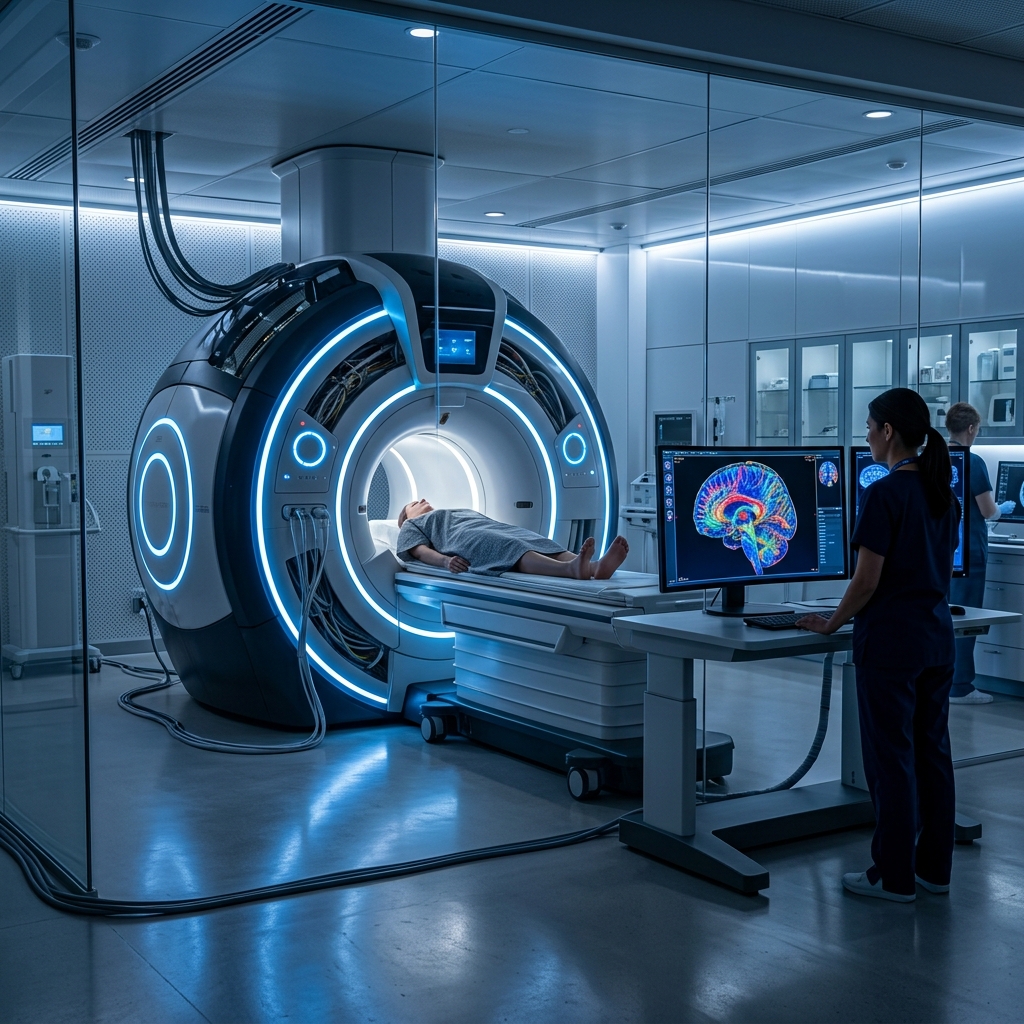
In 1977, the first full-body Magnetic Resonance Imaging (MRI) scan was performed. In 1990, Seiji Ogawa discovered how to use MRI to detect changes in blood oxygen levels, creating the "fMRI"—allowing scientists to watch the brain "think" in real-time.
Open in interactive timeline →Verified Facts
- MRI machines work by generating magnetic fields so incredibly powerful that they physically align the protons inside the water molecules of a human body, then use radio waves to knock them out of alignment and measure the signal they give off as they return.
- The invention of the fMRI allowed neuroscientists to map specific cognitive functions (like recognizing a face or feeling fear) to precise 3D locations in the brain based on where oxygenated blood was flowing.
- By applying AI to fMRI scans, researchers in 2023 were successfully able to "decode" and reconstruct the literal images a person was looking at purely by reading their brain scan.
Frequently Asked Questions
What was MRI & Functional MRI (fMRI)?
In 1977, the first full-body Magnetic Resonance Imaging (MRI) scan was performed. In 1990, Seiji Ogawa discovered how to use MRI to detect changes in blood oxygen levels, creating the "fMRI"—allowing scientists to watch the brain "think" in real-time.
When did MRI & Functional MRI (fMRI) happen?
MRI & Functional MRI (fMRI): 1977-1990 CE.
Why does MRI & Functional MRI (fMRI) matter?
Mapping thoughts to physical locations.
Sources & Further Reading
Cite This Page
AskHistoryAI. “MRI & Functional MRI (fMRI).” AskHistoryAI — Interactive Timeline of Everything. Updated 2026-09-11. https://askhistoryai.com/event/tech-mri/
Every fact on this page is checked against the published fact ledger and methodology; sources are listed above.