Moissanite: A Gem From a Meteorite Crater
A chemist mistakes a meteorite crystal for diamond.
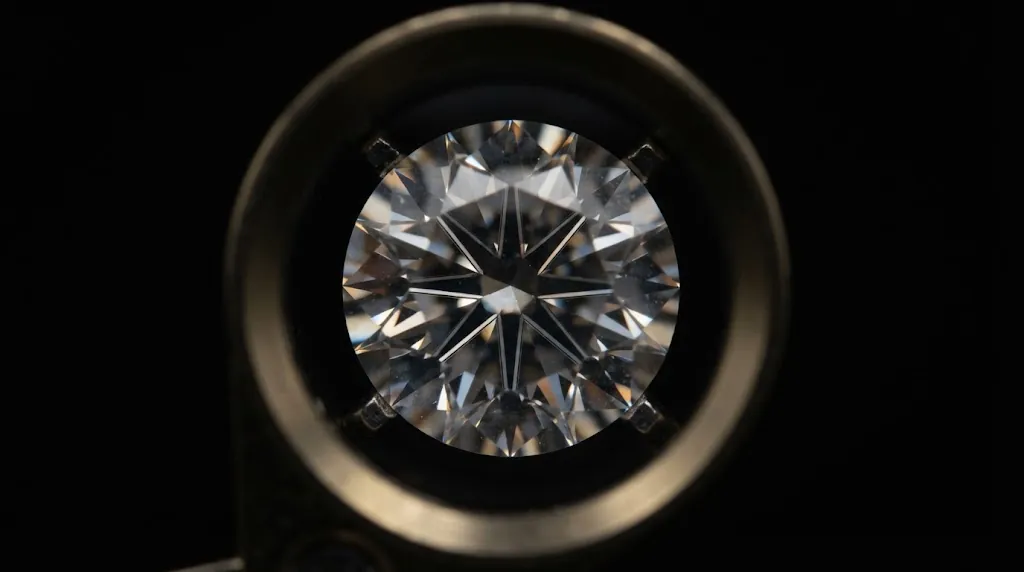
In 1893 Henri Moissan finds tiny, brilliant crystals in rock from an Arizona meteorite crater and takes them for diamonds. In 1904 he shows they are silicon carbide, a mineral almost unknown on Earth, and a century later lab-grown moissanite becomes one of the most popular diamond alternatives in jewellery.
Open in interactive timeline →Key Numbers
- Found by Henri Moissan
- 1893
- Identified as SiC
- 1904
- Mohs Hardness
- About 9.5
- In Jewellery Since
- 1998
Verified Facts
- In 1893 the French chemist Henri Moissan examined rock samples from what is now Meteor Crater, near Canyon Diablo in Arizona, and found tiny crystals he took for diamonds.
- In 1904 he identified the crystals as silicon carbide (SiC), not diamond. The mineral was named moissanite in his honour.
- Moissanite rates about 9.5 on the Mohs scale, just below diamond, and its dispersion (0.104) is far higher than diamond's, which is why it throws more rainbow fire.
- Natural moissanite is very rare. The stones in jewellery are lab-grown: Charles & Colvard brought moissanite to the jewellery market in 1998 after patenting the process.
Myth vs. Reality
Myth:
Reality: Moissanite is its own mineral, silicon carbide, with its own crystal structure. It is nearly as hard as diamond (about 9.5 on the Mohs scale) and has more fire, but it is not diamond and is not glass.
Myth:
Reality: Natural moissanite is very rare. Jewellery moissanite is grown in laboratories; it reached the jewellery market in 1998.
Frequently Asked Questions
Who discovered moissanite?
Henri Moissan, a French chemist, in 1893, in rock samples from what is now Meteor Crater near Canyon Diablo, Arizona. He first thought the crystals were diamonds and identified them as silicon carbide in 1904.
Is moissanite a real gemstone?
Yes. It is a real mineral, silicon carbide, rated about 9.5 on the Mohs scale. The moissanite sold in jewellery is lab-grown because natural moissanite is very rare.
Why does moissanite sparkle more than diamond?
Its dispersion, the splitting of light into colours, is about 0.104, much higher than diamond's, so it shows more rainbow fire.
When did moissanite jewellery go on sale?
In 1998, after Charles & Colvard (then C3 Inc.) received patents to create and market lab-grown silicon carbide gemstones.
Sources & Further Reading
Cite This Page
AskHistoryAI. “Moissanite: A Gem From a Meteorite Crater.” AskHistoryAI — Interactive Timeline of Everything. Updated 2026-10-08. https://askhistoryai.com/event/sv-moissanite/
Every fact on this page is checked against the published fact ledger and methodology; sources are listed above.