The Math Behind the Brilliant Cut
Optics decides how a diamond should sparkle.
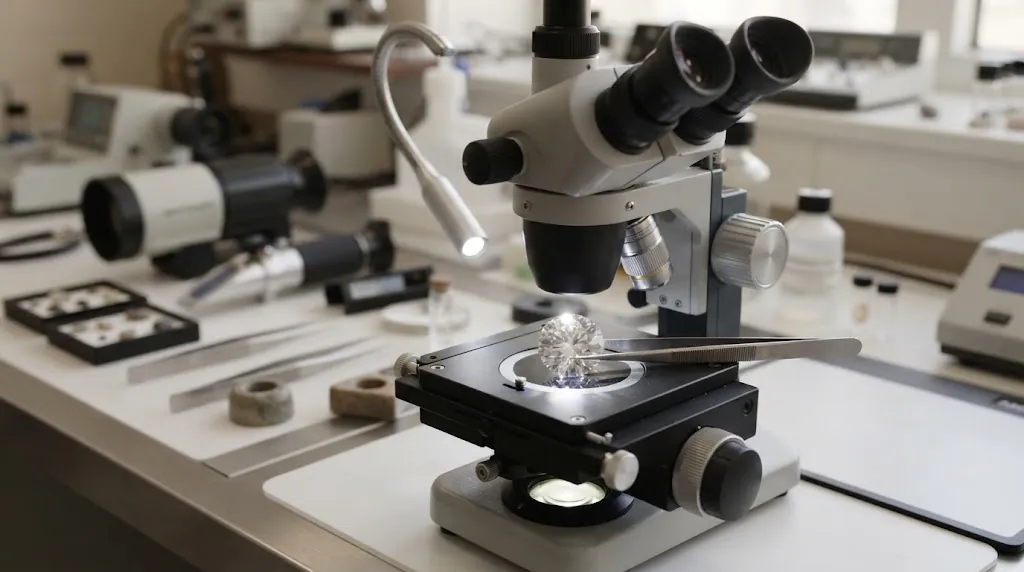
In 1919 Marcel Tolkowsky publishes Diamond Design, using the reflection and refraction of light to work out how a round diamond should be proportioned to balance brilliance and fire. His figures became the American Standard, the benchmark for round brilliant diamonds in North America.
Open in interactive timeline →Key Numbers
- Diamond Design Published
- 1919
- Became
- The American Standard
- Balanced
- Brilliance and fire
Verified Facts
- In 1919 Marcel Tolkowsky published Diamond Design, A Study of the Reflection and Refraction of Light in a Diamond.
- His proportions came from mathematical calculations that considered both the brilliance and the fire of the stone.
- They became the American Standard, also called the American Ideal Cut or Tolkowsky Brilliant: the diamond-cutting benchmark in North America.
- He meant them as general guidelines. Later round brilliants differ from his model in minor ways.
Myth vs. Reality
Myth:
Reality: Brilliant-style cuts existed before him. His 1919 book calculated the proportions that balance brilliance and fire, which became the American Standard.
Frequently Asked Questions
What did Marcel Tolkowsky do?
In 1919 he published Diamond Design, calculating from optics how a round brilliant diamond should be proportioned to balance brilliance and fire.
What is the American Standard cut?
The diamond-cutting benchmark in North America, based on Tolkowsky's 1919 specifications. It is also called the American Ideal Cut or Tolkowsky Brilliant.
Sources & Further Reading
Cite This Page
AskHistoryAI. “The Math Behind the Brilliant Cut.” AskHistoryAI — Interactive Timeline of Everything. Updated 2026-10-08. https://askhistoryai.com/event/sv-tolkowsky-brilliant/
Every fact on this page is checked against the published fact ledger and methodology; sources are listed above.