ENIAC: The First General-Purpose Electronic Computer
The 30-ton behemoth that ushered in the electronic age.
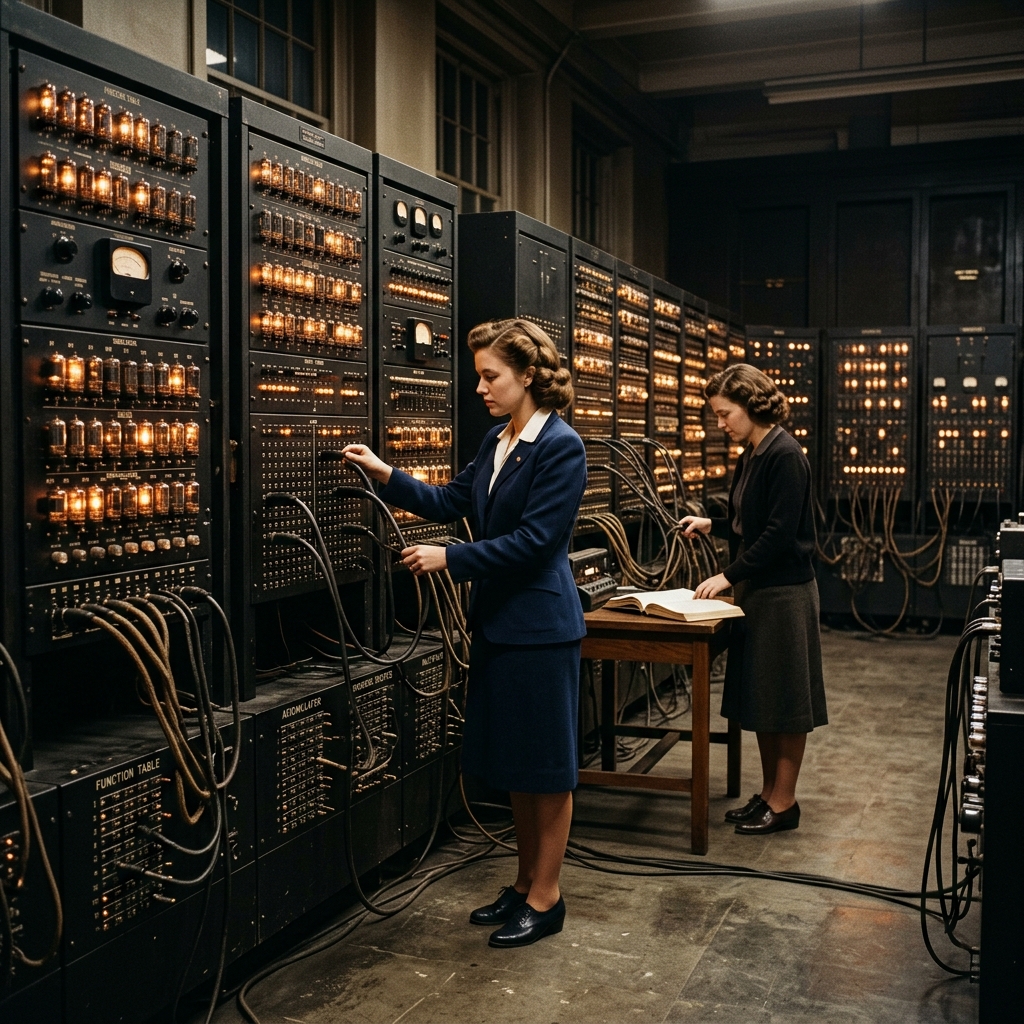
Built at the University of Pennsylvania, the Electronic Numerical Integrator and Computer (ENIAC) was the first programmable, electronic, general-purpose digital computer. It solved calculations 1,000 times faster than electromechanical machines.
Open in interactive timeline →Verified Facts
- ENIAC weighed 30 tons, took up 167 square meters of floor space, and required 18,000 vacuum tubes to operate. It consumed so much power (150 kW) that a rumor claimed it dimmed the lights in Philadelphia when turned on.
- It was programmed entirely by physically plugging in cables and turning dials—there was no stored "software" as we know it today.
- The primary programmers of ENIAC were six brilliant women—Kay McNulty, Betty Jennings, Betty Snyder, Marlyn Wescoff, Fran Bilas, and Ruth Lichterman—who were largely ignored by the press at the time.
Frequently Asked Questions
What was ENIAC: The First General-Purpose Electronic Computer?
Built at the University of Pennsylvania, the Electronic Numerical Integrator and Computer (ENIAC) was the first programmable, electronic, general-purpose digital computer. It solved calculations 1,000 times faster than electromechanical machines.
When did ENIAC: The First General-Purpose Electronic Computer happen?
ENIAC: The First General-Purpose Electronic Computer: 1945 CE.
Why does ENIAC: The First General-Purpose Electronic Computer matter?
The 30-ton behemoth that ushered in the electronic age.
Sources & Further Reading
Cite This Page
AskHistoryAI. “ENIAC: The First General-Purpose Electronic Computer.” AskHistoryAI — Interactive Timeline of Everything. Updated 2026-09-11. https://askhistoryai.com/event/tech-eniac/
Every fact on this page is checked against the published fact ledger and methodology; sources are listed above.