Invention of the Transistor
The tiny switch that replaced the vacuum tube and built the modern world.
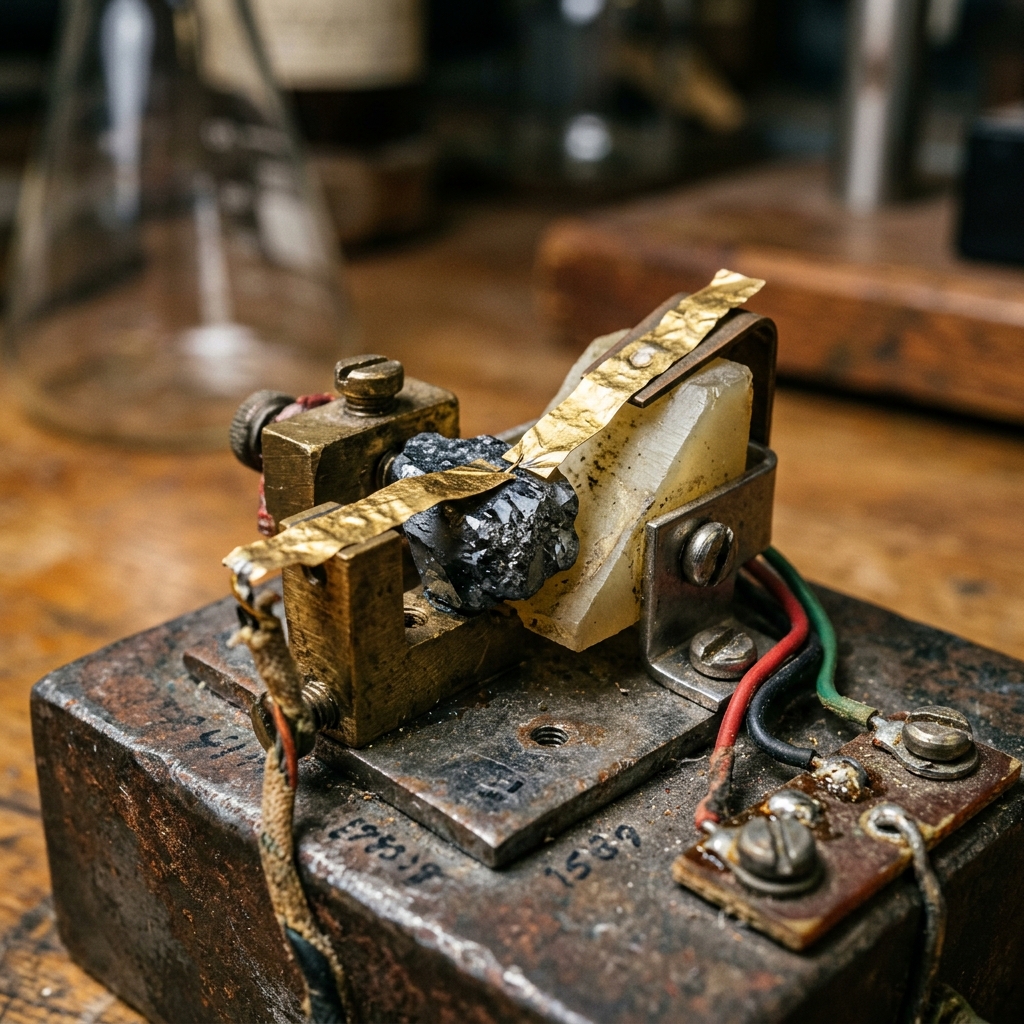
Invented by John Bardeen, Walter Brattain, and William Shockley at Bell Labs, the first point-contact transistor was a crude, tiny device that could amplify or switch electrical signals using semiconducting germanium instead of fragile, hot, power-hungry vacuum tubes.
Open in interactive timeline →Verified Facts
- The transistor is arguably the most important invention of the 20th century. Every modern electronic device—from pacemakers to smartphones to supercomputers—is built from microscopic transistors acting as binary switches (0 or 1).
- A modern Apple iPhone processor contains over 15 billion microscopic transistors packed onto a chip the size of a fingernail.
- The inventors won the Nobel Prize in Physics in 1956, though Shockley's later extreme racism and paranoia alienated him from the scientific community.
Frequently Asked Questions
What was Invention of the Transistor?
Invented by John Bardeen, Walter Brattain, and William Shockley at Bell Labs, the first point-contact transistor was a crude, tiny device that could amplify or switch electrical signals using semiconducting germanium instead of fragile, hot, power-hungry vacuum tubes.
When did Invention of the Transistor happen?
Invention of the Transistor: 1947 CE.
Why does Invention of the Transistor matter?
The tiny switch that replaced the vacuum tube and built the modern world.
Sources & Further Reading
Cite This Page
AskHistoryAI. “Invention of the Transistor.” AskHistoryAI — Interactive Timeline of Everything. Updated 2026-09-11. https://askhistoryai.com/event/tech-transistor/
Every fact on this page is checked against the published fact ledger and methodology; sources are listed above.