Zuse Z3: The Relay Paradigm
The second of Kurzweil's computing paradigms.
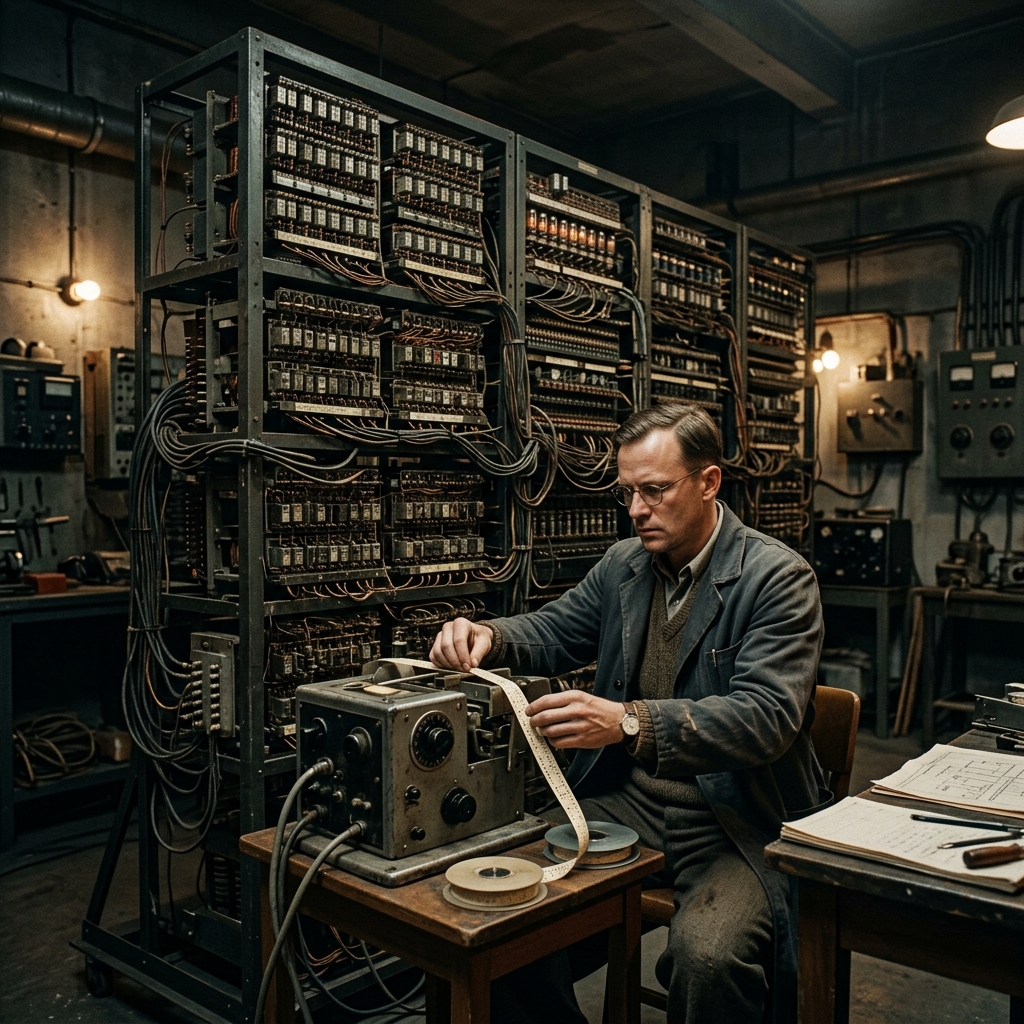
Designed by German engineer Konrad Zuse, the Z3 was the world's first working programmable, fully automatic digital computer. It represents Kurzweil's Second Paradigm of computing, as it was built entirely out of 2,600 electromechanical telephone relays.
Open in interactive timeline →Verified Facts
- Because it used physical relays that had to click open and shut, it operated at a clock speed of about 5.3 Hz (five operations per second).
- Zuse requested funding from the German government to replace the relays with faster vacuum tubes, but was denied because they believed World War II would be won before he could finish it.
- The original Z3 was destroyed by an Allied bombing raid on Berlin in 1943.
Frequently Asked Questions
What was Zuse Z3: The Relay Paradigm?
Designed by German engineer Konrad Zuse, the Z3 was the world's first working programmable, fully automatic digital computer. It represents Kurzweil's Second Paradigm of computing, as it was built entirely out of 2,600 electromechanical telephone relays.
When did Zuse Z3: The Relay Paradigm happen?
Zuse Z3: The Relay Paradigm: 1941 CE.
Why does Zuse Z3: The Relay Paradigm matter?
The second of Kurzweil's computing paradigms.
Sources & Further Reading
Cite This Page
AskHistoryAI. “Zuse Z3: The Relay Paradigm.” AskHistoryAI — Interactive Timeline of Everything. Updated 2026-09-11. https://askhistoryai.com/event/tech-zuse-z3/
Every fact on this page is checked against the published fact ledger and methodology; sources are listed above.