The Quartz Crisis
A crystal beats five centuries of gears.
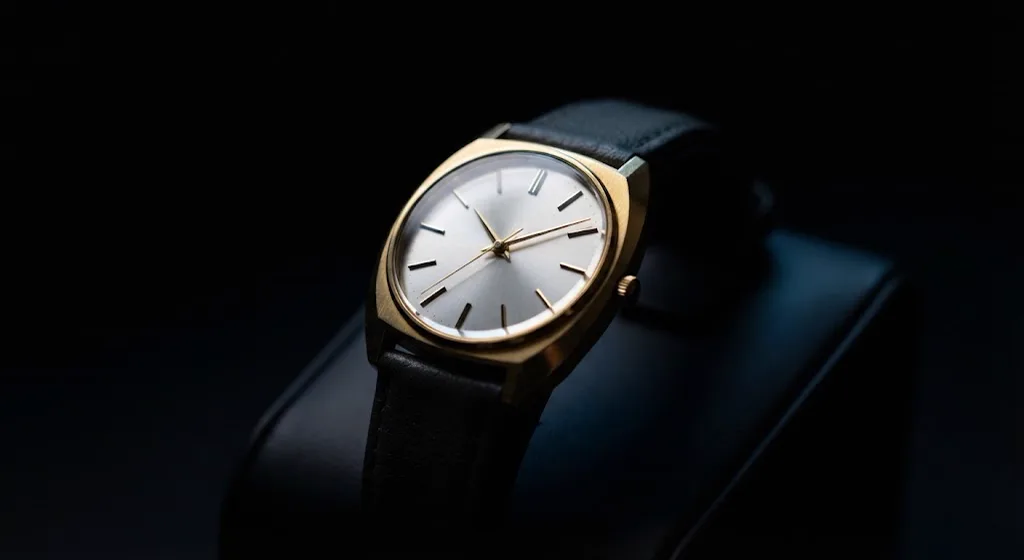
Seiko releases the Astron, the world's first quartz wristwatch. Within a decade a technology that keeps better time for less money has broken the grip of the Swiss mechanical watch industry.
Open in interactive timeline →Key Numbers
- Released
- 25 December 1969, Tokyo
- Launch Price
- 450,000 yen (~US$1,250)
- Oscillator
- 8,192 Hz quartz
- Accuracy
- ±5 seconds per month
- First Week Sales
- 100 gold watches
Verified Facts
- The Seiko Astron went on sale in Tokyo on 25 December 1969 as the world’s first quartz wristwatch.
- It followed roughly ten years of development at Seiko.
- It cost 450,000 yen, about US$1,250 at the time.
- All 100 gold watches in the first batch sold within a week.
- The Astron used an XY-type quartz oscillator running at 8,192 Hz.
- It held ±5 seconds per month — about one minute a year — with a battery life of a year or longer.
- The Astron is recognised on the IEEE Milestones list as a major advance in electrical engineering.
Myth vs. Reality
Myth:
Reality: The Astron launched at 450,000 yen, roughly US$1,250 in 1969 — a luxury object in a gold case. Quartz became the cheap technology only after the manufacturing scaled.
Myth:
Reality: They do not. The Astron held ±5 seconds a month in 1969, about a minute a year, which no mechanical wristwatch could approach. Mechanical watches are bought for other reasons.
Myth:
Reality: It was about price and accuracy at volume. Quartz was both cheaper to make and more accurate, and the Swiss industry that had dominated watchmaking lost the volume market over the following two decades.
Frequently Asked Questions
What was the first quartz wristwatch?
The Seiko Astron, released in Tokyo on 25 December 1969 after about ten years of development. It cost 450,000 yen, roughly US$1,250 at the time, and all 100 gold watches in the first batch sold within a week.
How accurate was the Seiko Astron?
It used an XY-type quartz oscillator running at 8,192 Hz and held ±5 seconds per month — about one minute a year — on a battery lasting a year or longer. No mechanical wristwatch of the era could come close.
What was the quartz crisis?
The period following the Astron’s launch in which quartz movements, being both cheaper to manufacture and far more accurate than mechanical ones, displaced the Swiss mechanical watch industry from the volume market over roughly two decades.
Is quartz or automatic more accurate?
Quartz, by a wide margin. The 1969 Astron already held about ±5 seconds a month, where a good mechanical movement is typically specified in seconds per day. Mechanical watches are chosen for craft, feel and longevity rather than precision.
Sources & Further Reading
Cite This Page
AskHistoryAI. “The Quartz Crisis.” AskHistoryAI — Interactive Timeline of Everything. Updated 2026-10-20. https://askhistoryai.com/event/sv-quartz-crisis/
Every fact on this page is checked against the published fact ledger and methodology; sources are listed above.
More from this project
- Quartz vs automatic — which is actually more accurate — The Horologist — The comparison the Astron forced in 1969, measured in seconds per month.
- Best watches under $500 — The Horologist — What the quartz revolution did to the price of keeping accurate time.
The Horologist is another reference site by the same author.